

Good nutrition doesn’t have to be complicated. The most effective Diet Tips aren’t about extreme restriction or short-lived fads — they’re about small, sustainable habits that fit into real life. Balanced meals, portion awareness, adequate hydration, and consistent routines — the core of good Diet Tips — matter far more than any single “miracle” food or rigid meal plan.
Whether you’re looking for practical Healthy Eating Tips to improve your daily meals, or simply want reliable Healthy Eating Advice that doesn’t involve extreme dieting, this guide covers everything from balanced meal building to weight management, mindful eating, and common mistakes to avoid. The goal is realistic, everyday progress — not perfection.
10 Powerful Healthy Eating Tips for Better Health
Below are ten practical, evidence-informed Diet Tips that can help you build healthier habits without overhauling your entire lifestyle overnight.
1. Build Balanced Meals
A balanced plate generally includes a source of protein, plenty of vegetables, some fruit, a whole grain or other carbohydrate, and a source of healthy fat. Paying attention to portions — rather than eliminating entire food groups — is one of the most practical Healthy Diet Tips for everyday eating. Balanced Healthy Meal Tips like this make it easier to get a wide range of nutrients without overthinking every meal.
2. Eat More Whole and Minimally Processed Foods
Fruits, vegetables, whole grains, legumes, nuts, and seeds tend to offer more nutritional value per calorie than heavily processed alternatives. Choosing minimally processed options more often is one of the simplest Healthy Food Tips for improving overall diet quality, without requiring you to give up convenience entirely.
3. Include Enough Protein
Protein supports muscle repair, satiety, and overall body maintenance. Good sources include eggs, fish, chicken, beans, lentils, Greek yogurt, tofu, nuts, and seeds. Protein needs vary by age, activity level, and individual goals, so there’s no single universal requirement — the key is including a source of protein at most meals.
4. Choose More Fiber-Rich Foods
Vegetables, fruits, beans, lentils, oats, whole grains, nuts, and seeds all provide fiber, which supports digestive health and can help you feel fuller after meals. Increasing fiber gradually, along with adequate water intake, tends to be more comfortable than adding large amounts all at once.
5. Pay Attention to Portions
Portion awareness — rather than strict calorie counting — can be a practical way to manage intake. Eating slowly, recognizing hunger and fullness cues, and avoiding distracted eating are all part of effective Mindful Eating Techniques that can reduce unnecessary overeating.
6. Drink Enough Water
Water should generally be your main beverage throughout the day. Staying hydrated supports digestion, energy, and overall function, while limiting sugary drinks can reduce unnecessary added sugar intake. Hydration needs vary between individuals based on activity level, climate, and body size — water alone doesn’t cause weight loss, but it supports overall healthy habits.
7. Plan Healthy Meals Ahead
Basic grocery planning and simple meal preparation make it far easier to stick to healthier choices, especially on busy days. Keeping healthy snacks accessible and preparing food at home more often are practical pieces of Advice to Eat Healthy that reduce reliance on last-minute convenience options.
8. Make Healthier Food Choices When Eating Out
Eating out doesn’t have to derail healthy habits. Look for vegetable-based sides, lean protein options, and whole-grain choices where available, and be mindful of portion sizes, sauces, and sugary beverages. There’s no need to avoid restaurants entirely — small, informed choices can go a long way.
9. Use Diet Tips for Healthy Weight Control
Sustainable Tips for Weight Control generally combine balanced meals, portion awareness, regular movement, adequate sleep, and consistent hydration. Healthy Weight Loss Tips and Healthy Ways to Lose Weight focus on gradual, maintainable change rather than rapid results. For more structured guidance, visit our Weight Management section.
10. Focus on Consistency Instead of Perfection
Sustainable eating allows flexibility — enjoying favorite foods in moderation without falling into all-or-nothing thinking. This kind of practical Healthy Eating Advice and Advice for a Healthy Diet tends to hold up far better over time than rigid, perfectionist approaches.
Healthy Eating Tips for Everyday Life
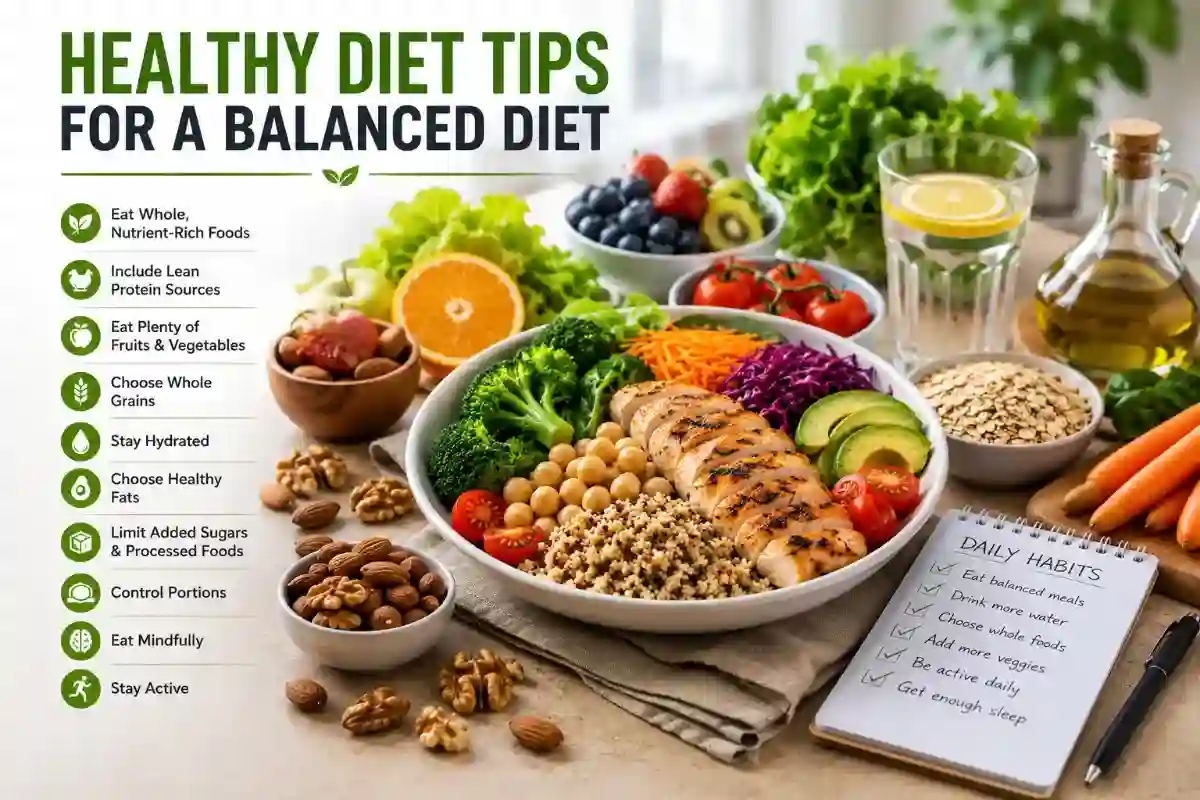
Applying Healthy Eating Tips throughout the day doesn’t need to be complicated. Good Diet Tips for breakfast, lunch, and dinner all follow the same basic principle: balance. A balanced breakfast, a lunch built around protein and vegetables, a similarly balanced dinner, and one or two thoughtful snacks can cover most nutritional bases. At work, keeping simple Healthy Food Tips in mind — like packing a snack or choosing water over sugary drinks — helps avoid relying on whatever’s most convenient.
While traveling or managing a busy schedule, simple Healthy Meal Tips such as choosing whole foods when available and staying hydrated can help maintain consistency. For families, involving everyone in meal choices tends to make healthy habits easier to sustain long term.
Healthy Diet Tips for a Balanced Diet
A balanced dietary pattern draws from protein, carbohydrates, healthy fats, fruits, vegetables, fiber, whole grains, and adequate hydration. These Healthy Diet Tips work best as general guidance rather than rigid rules — variety and proportion matter more than eliminating entire food groups, which generally isn’t necessary unless recommended by a healthcare professional for a specific medical reason. Explore more structured guidance in our Nutrition section.
Healthy Food Tips for Better Daily Choices
Small substitutions can add up over time. Consider whole grains instead of refined grains where appropriate, fruit instead of heavily processed sweet snacks, nuts and seeds instead of highly processed options, water instead of sugary drinks, and adding vegetables or a protein source to meals you already eat. These practical Healthy Food Tips and Advice to Eat Healthy strategies don’t require a complete lifestyle overhaul.
Healthy Meal Tips and Simple Meal Ideas
Practical, balanced meal ideas can make healthy eating easier to visualize. Consider eggs with vegetables and whole-grain toast for breakfast, oats with berries and nuts as a quick option, Greek yogurt with fruit and seeds for a light meal, grilled chicken with vegetables and brown rice for dinner, a lentil and vegetable bowl for a plant-based option, or fish with vegetables and whole grains. These are starting points, not rigid meal plans — feel free to adjust based on your preferences and needs.
Healthy Eating Advice for Weight Management
Sustainable weight management generally comes from a combination of balanced eating, portion awareness, adequate protein and fiber, regular physical activity, sufficient sleep, and consistent hydration — rather than any single dietary trick. This kind of Healthy Eating Advice emphasizes long-term habits over quick fixes. For more on combining nutrition with movement, see our Physical Fitness resources.
Weight Loss Tips at Home
Many effective Weight Loss Tips at Home revolve around simple, repeatable habits: basic meal planning, cooking more meals yourself, taking regular walks, keeping healthy snacks accessible, staying mindful of portions, reducing excessive sugary drinks, and maintaining a consistent daily routine. These Healthy Weight Loss Tips and general Fat Loss Tips work best when practiced consistently rather than as short-term fixes, and they don’t require special equipment or expensive programs.
Weight Loss Meal Ideas
Practical Weight Loss Meal Ideas and Diet Tips generally emphasize protein, fiber, and vegetables to support satiety within reasonable portions. Simple Weight Loss Meal Prep Ideas — like preparing a batch of grilled protein, roasted vegetables, and a whole grain at the start of the week — can make consistent, balanced eating far more manageable. When exploring Weight Loss Diet Ideas, avoid extremely low-calorie meal plans or skipping meals, as these approaches are generally unsustainable and can backfire over time.
Best Way to Lose Weight — Healthy Approaches
There is no single universal Diet Tips formula, and no Best Way to Lose Weight or Fastest Way to Lose Weight that works identically for everyone. The Most Effective Way to Lose Weight for a given individual depends on their starting point, lifestyle, preferences, and any underlying health considerations. Rather than chasing Quick Weight Loss Tips or Fast Weight Loss Tips that promise dramatic results, sustainable approaches generally combine balanced nutrition, regular physical activity, adequate sleep, and realistic expectations. Extreme or rapid weight-loss methods are not recommended, as they can be difficult to maintain and may pose health risks.
Belly Fat and Weight Management
It’s worth being clear that targeted fat loss from one specific body area — including the belly — cannot be guaranteed through any particular food or exercise. So-called Belly Fat Loss Tips and Easy Tips to Lose Belly Fat generally overlap with broader healthy weight-management strategies: balanced eating, regular physical activity, adequate sleep, and stress management. Be skeptical of any Diet to Lose Belly Fat that promises fast, localized results — this is not how fat loss works physiologically.
Mindful Eating Techniques
Practicing Mindful Eating Techniques is one of the simplest Diet Tips for building a healthier relationship with food. This includes eating more slowly, minimizing distractions like screens during meals, paying attention to genuine hunger and fullness signals, and taking time to actually enjoy your food. These habits can help reduce automatic or emotional overeating without requiring any specific diet or food restriction.
Common Diet Mistakes to Avoid
Even well-intentioned efforts to follow Diet Tips can run into familiar pitfalls: extreme restriction, unnecessarily skipping meals, following fad diets, relying too heavily on one “superfood,” ignoring portion sizes, neglecting hydration, eating too few vegetables, expecting instant results, overusing supplements, or comparing your progress to other people’s. A more practical alternative is focusing on gradual, sustainable changes and giving new habits time to become routine.
How to Make Healthy Eating Sustainable
Long-term success with Diet Tips generally comes from gradual changes, basic meal planning, flexible eating that allows for social occasions, food variety to avoid boredom, budget-friendly choices, family-friendly meals, and occasional eating out without guilt. This kind of realistic Healthy Eating Advice and Advice for a Healthy Diet tends to hold up better over months and years than short-term, restrictive approaches. Explore more sustainable habit-building ideas in our Healthy Lifestyle section.
Frequently Asked Questions
What are the best diet tips for healthy eating?
Building balanced meals, prioritizing whole foods, including enough protein and fiber, staying hydrated, and focusing on consistency rather than perfection are among the most practical Diet Tips for everyday eating.
How can I start eating a healthier diet?
Start with small, gradual changes — such as adding vegetables to meals, choosing whole grains, and planning meals ahead — rather than attempting a complete overhaul all at once.
What are simple healthy eating tips for beginners?
Focus on balanced plates, portion awareness, adequate hydration, and minimally processed foods. These fundamentals matter more than any specific trend or restrictive rule.
What foods should be included in a balanced diet?
A balanced diet typically includes protein, whole grains, fruits, vegetables, healthy fats, and adequate fiber from a variety of sources.
Can healthy eating help with weight management?
Yes, balanced eating combined with portion awareness, regular activity, and adequate sleep can support healthy weight management, though results vary by individual and no approach guarantees a specific outcome.
What are some easy healthy meal tips?
Simple combinations like eggs with vegetables and whole-grain toast, or a lentil and vegetable bowl, offer balanced nutrition without requiring complicated preparation.
How can I make healthy eating easier every day?
Basic meal planning, keeping healthy snacks accessible, and preparing food at home more often can significantly reduce reliance on last-minute unhealthy choices.
What are common diet mistakes to avoid?
Common mistakes include extreme restriction, skipping meals, relying on a single food, ignoring portions, and expecting instant results — all of which tend to be unsustainable long term.
Why Practical Diet Tips Matter More Than Quick Fixes
Searching for reliable Diet Tips online can feel overwhelming, since so much conflicting advice exists about what to eat, when to eat, and how much to eat. The truth is that the most useful Diet Tips are rarely dramatic. They tend to be small, repeatable actions — adding a vegetable to dinner, swapping a sugary drink for water, or choosing a whole grain over a refined one. These simple Diet Tips accumulate over weeks and months, producing far more meaningful change than any single dramatic diet overhaul ever could.
One reason good Diet Tips work better than extreme approaches is that they respect how people actually live. Few people can sustain rigid meal plans indefinitely, especially when work schedules, family responsibilities, and social occasions are part of daily life. Practical Diet Tips account for this reality by focusing on flexibility rather than perfection. Instead of banning entire categories of food, they encourage moderation, awareness, and gradual improvement — an approach that tends to hold up far better over the long run than short-lived restriction.
Another reason Diet Tips grounded in balance outperform fad approaches is that they support both physical and mental well-being. Constantly restricting food groups or obsessing over strict rules can create an unhealthy relationship with eating for many people. Diet Tips that emphasize variety, portion awareness, and mindful eating instead help build confidence around food choices. Over time, this reduces the all-or-nothing mindset that often derails otherwise well-intentioned attempts at healthier eating, making consistent progress far more achievable.
Ultimately, the value of good Diet Tips lies in their sustainability. Anyone can follow a strict, short-term diet for a few weeks, but genuine, lasting improvement in health depends on habits that can realistically continue for years. That’s why this guide emphasizes balanced meals, adequate hydration, portion awareness, and gradual change rather than quick fixes. When Diet Tips are practical enough to fit into everyday life, they stop feeling like a temporary project and start becoming simply how a person eats — which is exactly the outcome worth aiming for.
Building a Simple Diet Tips Routine You Can Actually Follow
Many people search for Diet Tips expecting a complicated system, but the most effective routines are usually the simplest ones. A basic Diet Tips routine might include planning meals loosely for the week, keeping a few healthy staples stocked at home, and choosing one or two small improvements to focus on at a time rather than trying to change everything at once. This gradual approach makes good Diet Tips easier to stick with, since it doesn’t rely on willpower alone to sustain dramatic changes overnight.
Consistency is what turns occasional Diet Tips into lasting habits. Reviewing your eating pattern every few weeks — without judgment — can help you notice what’s working and what isn’t, so you can adjust your Diet Tips routine as needed. Some weeks will go better than others, and that’s completely normal. The goal of following practical Diet Tips isn’t a flawless record; it’s steady, realistic progress that fits your actual life, your schedule, and your food preferences, rather than someone else’s idea of the perfect diet.
Final Thoughts
Practical Diet Tips aren’t about extreme restriction or chasing the newest trend — they’re about consistent, balanced choices that fit realistically into your life. Focusing on balanced meals, adequate protein and fiber, portion awareness, hydration, and sustainable habits tends to serve people far better over time than rigid or extreme diets.
By applying a few of these Healthy Eating Tips consistently, you can build an eating pattern that supports your energy, weight management goals, and overall well-being — without requiring perfection along the way. To learn more about our approach, visit our About Us page, or reach out through Contact Us with any questions.
References
- World Health Organization (WHO) – Healthy Diet
- Centers for Disease Control and Prevention (CDC) – Nutrition
- National Institutes of Health (NIH) – Health Information
- U.S. Department of Agriculture (USDA) – MyPlate
Medical Disclaimer
This content is for general informational and educational purposes only. It is not a substitute for professional medical advice, diagnosis, or treatment. Individual nutritional and exercise needs may vary. Consult a qualified healthcare professional for personalized advice, especially if you have a medical condition or specific health concern. Read our full Disclaimer.
Author Profile
The Health Physical Fitness editorial team focuses on creating research-informed, practical content covering nutrition, fitness, and healthy lifestyle topics. Our approach centers on accurate, trustworthy, and reader-friendly information designed to help everyday readers make realistic, sustainable improvements to their health habits. Learn more on our About Us page, and review our Privacy Policy and Terms and Conditions for more information about how we operate.
Explore More
Continue exploring related topics in our Health Wellness section, or browse our Blog for additional articles on nutrition, fitness, and healthy living.