
What Calisthenics Means for Beginners
Calisthenics beginners often start with one simple question: can bodyweight alone build real strength? The answer is yes, and the proof is everywhere, from busy parents training in living rooms to athletes warming up in parks. Calisthenics uses your own body as the resistance, so you need no machines, no membership, and no rack of dumbbells. You learn to move well first, then you make each move harder in small steps. This guide shows you six moves, a weekly plan, and the form cues that keep your joints safe while you grow stronger week by week. Many people stick with it because each session ends with a small win.
For calisthenics beginners, the biggest advantage is freedom. You can train at home, in a park, or in a hotel room, because the only tool you need is your own body. That freedom also keeps costs at zero, which matters when you are testing whether a new habit will stick. A calisthenics workout for beginners usually takes twenty to thirty minutes, fits around work and family, and leaves you energised rather than exhausted. Start with three sessions a week and give your body a rest day between sessions.
Bodyweight training also teaches control. Every rep asks your muscles, joints, and balance to work together, which builds coordination that machines cannot teach. Calisthenics beginners who practise slowly and with full range of motion gain strength that shows up in daily life, from carrying groceries to climbing stairs without getting winded. The six moves below cover your chest, back, legs, arms, and core, so nothing important is left out.
Why Bodyweight Training Works So Well
Strength grows when muscles work against resistance, and your body weight is a serious load. A push-up asks you to lift about two thirds of your body weight, while a single-leg squat can challenge even strong legs. Research and coaching practice agree that progressive bodyweight training builds muscle and strength, especially in the first year. Beginners can keep progressing for months by changing leverage, tempo, and rest, long before they ever need added weight.
Another reason bodyweight training works is that it is joint friendly when done well. You control the speed, you choose the range, and you can stop the moment form breaks down. Calisthenics beginners should treat pain as a stop sign, not a badge of honour, and swap any move that hurts for an easier version. Over weeks, tendons and ligaments adapt alongside muscles, which protects knees, shoulders, and wrists as the exercises get harder. Start with the easiest version of each move, and only move up when ten clean reps feel comfortable and pain-free.
Consistency matters more than intensity at the start. Three short sessions a week beat one heroic workout followed by a week of soreness. Calisthenics beginners who track their reps in a notebook or phone app can see progress clearly, and that visible progress keeps motivation alive. Aim to add one rep, one second, or one small step of difficulty each week, and the results will follow.
The 6 Best Powerful Bodyweight Moves
These six moves form a complete routine. Together they train pushing, pulling, squatting, hinging, and bracing, which covers every major muscle group. Calisthenics beginners should learn each move with good form before adding reps or harder versions. Rest sixty to ninety seconds between sets, breathe steadily, and stop each set one or two reps short of failure while you are learning.
1. Push-Ups for a Strong Chest
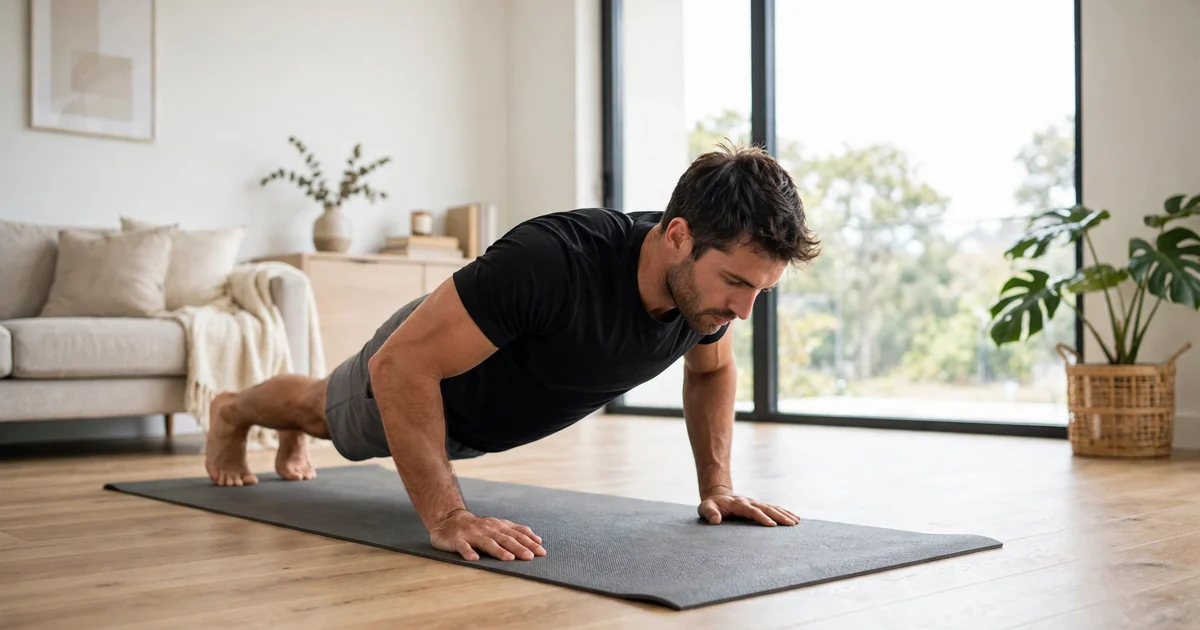
Push-ups are the classic upper-body builder, and they train your chest, shoulders, and triceps in one move. Calisthenics beginners should start with hands under shoulders, body in a straight line from head to heels, and core braced tight. Lower your chest toward the floor for two seconds, pause briefly, then push back up without letting your hips sag or your elbows flare wide.
If full push-ups are too hard, start on your knees or with hands on a sturdy table or step. Calisthenics beginners who use these easier versions still build real strength, because the muscles work through the same range. When you can do three sets of twelve clean knee push-ups, move to full push-ups. Keep your neck neutral, look at the floor just ahead of your hands, and breathe out as you push.
2. Pull-Ups for a Strong Back
Pull-ups build the back and biceps, and they are the hardest move in this list for most people. Calisthenics beginners can start with a sturdy bar in a park or a doorway bar at home, gripping just wider than shoulder width. Hang with straight arms, pull your chest toward the bar, and lower yourself slowly for three seconds. Even one slow, controlled rep is a fine starting point.
If you cannot do a full pull-up yet, use negatives: jump or step up so your chin is above the bar, then lower yourself as slowly as you can. Calisthenics beginners often gain their first full pull-up within six to eight weeks of practising negatives twice a week. Australian pull-ups, where your body stays angled under a low bar, are another good stepping stone. Keep your shoulders away from your ears and avoid swinging.
3. Bodyweight Squats for Powerful Legs
Squats train the thighs, glutes, and calves, and they keep your legs strong for stairs, hills, and sport. Calisthenics beginners should stand with feet shoulder-width apart, toes turned slightly out, and chest tall. Sit your hips back and down as if reaching for a chair, keep your knees tracking over your toes, and drive through your heels to stand. Go as deep as you can while keeping your heels on the floor.
Depth matters more than speed, so take two seconds down and one second up. Beginners who struggle with balance can hold a door frame or practise sitting down to a chair and standing up without using their hands. When bodyweight squats feel easy, try split squats or slow tempo squats with a three-second lowering phase. Keep your knees from caving inward and your back from rounding.
4. Dips for Strong Arms and Chest
Dips target the triceps, chest, and shoulders, and they need only a sturdy chair, bench, or low parallel bars. Calisthenics beginners should place hands beside their hips, fingers forward, and keep shoulders down and away from the ears. Lower your body until your upper arms are roughly parallel to the floor, then press back up without shrugging. Keep elbows pointing back, not flaring out to the sides.
Chair dips are the friendliest starting version, with feet on the floor and knees bent. Beginners can make them harder by straightening the legs or placing feet on a second chair. If your shoulders ache, shorten the range and stop before pain appears. Three sets of eight to twelve slow dips, done twice a week, build noticeable arm strength within a month.
5. Planks for a Solid Core
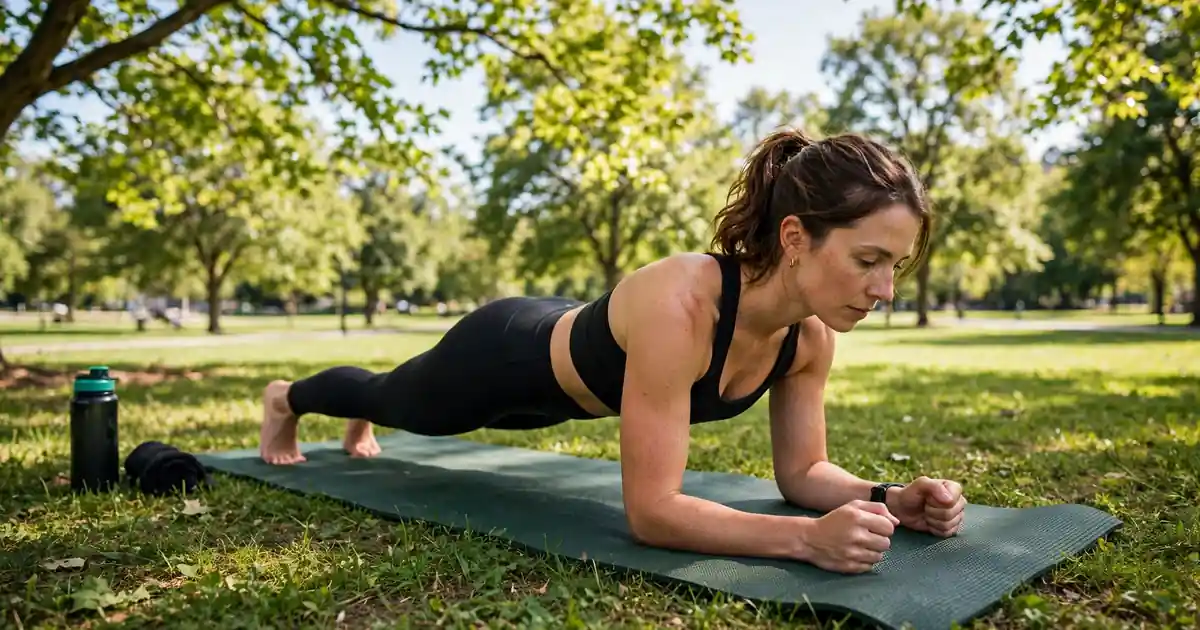
Planks train the whole core, including the deep muscles that protect your lower back. Calisthenics beginners should set forearms on the floor, elbows under shoulders, and hold a straight line from head to heels. Squeeze your glutes, brace your belly as if someone is about to poke it, and breathe normally. A twenty-second hold with perfect form beats a minute with sagging hips.
Build your hold by five seconds each week, aiming for three sets of thirty to sixty seconds. Calisthenics beginners who find planks easy can try shoulder taps or slow mountain climbers, which add movement while keeping the core braced. Never let your lower back arch or your hips pike up high, because both mistakes take the work away from the core. Rest thirty seconds between sets.
6. Lunges for Balance and Leg Strength
Lunges train each leg on its own, which fixes strength gaps between sides and sharpens balance. Calisthenics beginners should step forward, lower the back knee toward the floor, and keep the front knee over the ankle. Push through the front heel to return, then switch legs. Take your time, because rushing lunges is how ankles roll and knees wobble.
Start with six lunges per leg and add one rep per leg each week. Calisthenics beginners who wobble can hold a wall or chair lightly for balance until confidence grows. Reverse lunges, stepping backward instead of forward, are gentler on knees and a good choice if forward lunges feel uncomfortable. Keep your torso tall and your steps a comfortable length, not too long or too short.
How to Progress Without Equipment
Progress in calisthenics comes from making the same moves harder in small, planned steps. You can slow the lowering phase to three or four seconds, add a pause at the hardest point, or move from two legs to one leg. Calisthenics beginners should change only one thing at a time, so they know what caused the improvement. Write down sets, reps, and hold times after every session, and review the notes each Sunday. Small jumps beat big leaps, because tendons adapt more slowly than muscles and need time to catch up.
Rest is part of progression, not a break from it. Muscles grow stronger during recovery, so calisthenics beginners need at least one full rest day between hard sessions for the same muscles. Sleep seven to nine hours when you can, eat enough protein across the day, and drink water before, during, and after training. If progress stalls for two weeks, add an extra rest day or drop back to an easier version for one session, then build again.
A Simple Weekly Plan for Beginners
This plan uses three sessions a week with a rest day between them, and each session takes about twenty-five minutes. Calisthenics beginners can follow it for six weeks, then add a set or a harder version of one move. Warm up for five minutes first with arm circles, leg swings, and easy marching in place. Finish with gentle stretching for the chest, hips, and hamstrings.
- Monday: push-ups 3 sets of 8, squats 3 sets of 12, planks 3 holds of 20 seconds.
- Wednesday: pull-up negatives 3 sets of 4, lunges 3 sets of 6 per leg, dips 3 sets of 8.
- Friday: push-ups 3 sets of 8, squats 3 sets of 12, planks 3 holds of 20 seconds, plus pull-up negatives 2 sets of 4.
- Rest days: walk, stretch lightly, and let muscles recover fully.
- Week 4 check: add one rep to each set or five seconds to each plank hold.
- Week 6 check: try a harder version of one move, such as full push-ups or slower negatives.
For calisthenics beginners, the plan works because it repeats the same six moves often enough for skill to grow. Repeating moves is not boring, it is how your nervous system learns. If a session feels too easy, add reps before adding new exercises. If a session feels too hard, cut one set and finish strong. The goal is to finish each week feeling capable, not crushed.
Mistakes That Slow Your Progress
The most common mistake is rushing reps to hit a number. Fast, sloppy reps teach bad patterns and strain joints, while slow, clean reps build strength safely. Calisthenics beginners should count two seconds down and one second up on every rep, and stop the set when form breaks. Another mistake is skipping the warm-up, which leaves cold muscles stiff and more likely to complain. Five minutes of easy movement is enough.
Skipping pulling exercises is the second big mistake. Many beginners love push-ups and squats but avoid pull-ups because they are hard, and that imbalance can round the shoulders over time. Calisthenics beginners should give pulling at least as much attention as pushing, even if pulling means negatives and rows under a table. Finally, remember that rest days count: training the same muscles hard every day stalls progress and invites overuse aches.
Calisthenics Beginners: Frequently Asked Questions
How long does it take calisthenics beginners to see results?
Most calisthenics beginners notice better energy and steadier balance within two to three weeks, and visible strength gains within six to eight weeks of training three times a week. Muscle growth is slower and depends on food, sleep, and consistency, so judge progress by reps and hold times, not only by the mirror. Keep a simple log and compare week one with week six.
Do calisthenics beginners need any equipment at all?
No, you can start with zero equipment, because all six moves in this guide use only your body. A pull-up bar helps once you are ready for pull-ups, and parks often have one for free. A yoga mat adds comfort for planks and push-ups, but a carpet or towel works too. Spend money only when a tool clearly solves a problem.
Can calisthenics beginners build muscle with bodyweight only?
Yes, bodyweight training builds muscle when you progress the moves and eat enough protein. Beginners gain muscle fastest in the first year, because the body adapts quickly to new training. Make exercises harder over time by slowing reps, adding pauses, or switching to single-leg and single-arm versions. Food and sleep matter as much as the workout itself.
How many days a week should calisthenics beginners train?
Three days a week is the sweet spot for most beginners, with a rest day between sessions. This gives muscles time to recover and grow while the habit stays easy to keep. Two days a week still works if your schedule is tight, and four days is fine once the routine feels easy. Avoid training the same muscles hard on back-to-back days.
Is calisthenics safe for people with bad knees or shoulders?
Calisthenics can be safe with the right versions, but painful joints need respect. Choose knee-friendly moves like reverse lunges and chair-assisted squats, and shorten ranges that hurt. For shoulders, keep dips shallow and pull-ups controlled, and stop if sharp pain appears. Anyone with a joint condition or recent injury should check with a doctor or physiotherapist before starting.
What should I eat to support bodyweight training?
Food supports training best when it is simple and steady. Eat enough protein at each meal, with eggs, lentils, yoghurt, chicken, or beans, and add whole grains, fruit, and vegetables for energy. Drink water all day, and eat a light snack with protein and carbs within an hour after training. You do not need supplements to make progress, and a balanced diet beats any superfood.
Final Thoughts on Your Calisthenics Journey
Calisthenics beginners who start small and stay steady often surprise themselves. Six moves, three sessions a week, and a notebook are enough to build real strength without spending money on equipment or memberships. Focus on clean form, add a little difficulty each week, and let rest days do their quiet work. Your body is the gym, and it travels with you everywhere.
Begin today with one short session, even if it is only the six moves done once through. Calisthenics beginners do not need a perfect plan, they need a first step and a second one after it. Six weeks from now, compare your reps with today and enjoy the proof that bodyweight training works. Then set a new goal, pick a harder version, and keep going.
Disclaimer: This article is for educational and informational purposes only and is not medical advice. Always consult a qualified healthcare professional for any health concern.

Author Profile by Health Physical Fitness
I write evidence-based educational articles on health, fitness, wellness, nutrition, diet, weight management, healthy foods, lifestyle and skincare. All articles are for educational and informational purposes only, not medical advice.
Contact the editor: editor@healthphysicalfitness.com