
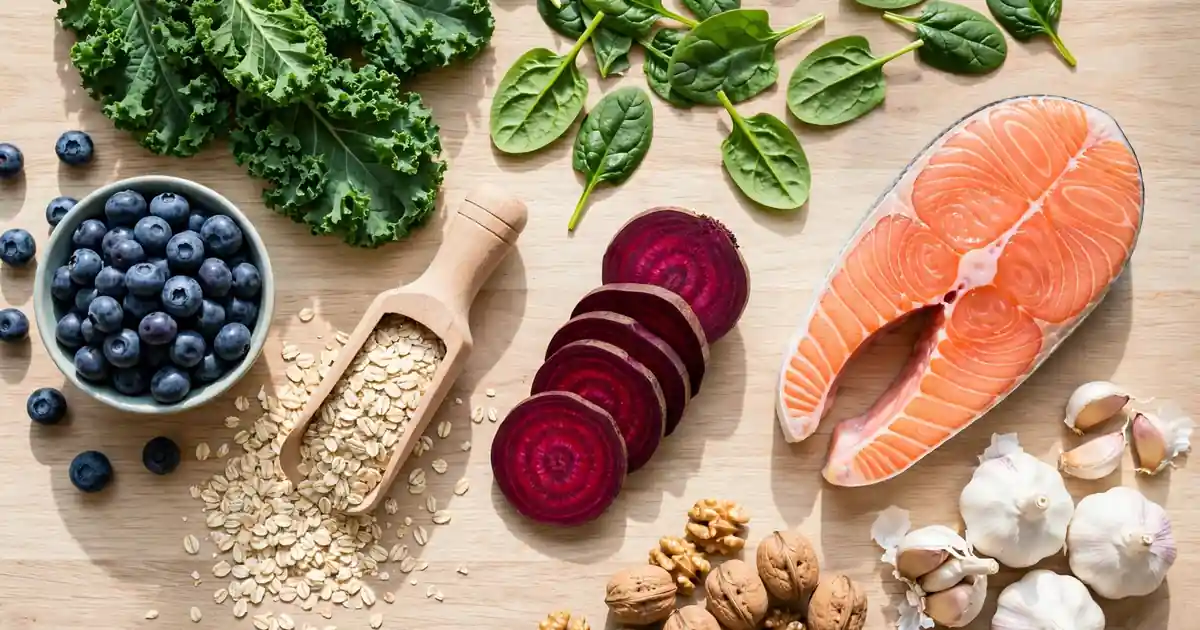
Foods lower blood pressure in small, steady ways when they become part of everyday meals, and foods that lower blood pressure naturally are ordinary foods you can buy at any grocery store. Leafy greens, berries, oats, beetroot, salmon, garlic and walnuts carry nutrients linked with healthier blood pressure, such as potassium, magnesium, fibre, nitrates and omega-3 fats. No single food works like medicine. But eating this way may help support healthy blood pressure, especially when it replaces salty, processed foods. This guide explains seven such foods.
Blood pressure rises and falls during the day, shaped by salt intake, body weight, sleep, stress and movement. Food is one factor you can change at every meal without special equipment. The DASH eating plan, which doctors often suggest for blood pressure, is built on the same idea: more vegetables, fruits, whole grains and low-fat dairy, with less salt, sugar and saturated fat. The seven foods below fit that pattern and show how foods lower blood pressure through everyday nutrients.
Why Foods That Lower Blood Pressure Matter for Your Heart
High blood pressure is common and often has no clear symptoms, so many people do not know they have it until a routine check finds it. Over years, raised pressure can strain the heart, arteries, kidneys and brain. That is why doctors call it a silent risk factor. Food cannot remove that risk alone, but nutrients in certain foods may help manage pressure better, which is how foods lower blood pressure in practice. Potassium balances sodium, magnesium helps blood vessels relax, and beetroot nitrates may help vessels widen.
Small changes matter because blood pressure responds to patterns, not single meals. A plant-rich, low-salt diet may help support blood pressure within weeks, and the effect may grow as it becomes a habit. Research suggests the DASH eating plan may lower systolic blood pressure by several points, though results vary. The goal is a steady way of eating you can keep for years, and foods lower blood pressure best as part of such a pattern.
7 Best Powerful Foods That Lower Blood Pressure
Each food below brings something different to the table, from potassium and magnesium to nitrates and healthy fats. Together they cover the nutrients that research links most often with blood pressure support, and they show that foods lower blood pressure through nutrients, not through magic. All seven are easy to find in most grocery stores.
1. Leafy Greens: Spinach and Kale
Leafy greens are rich in potassium, magnesium and nitrates, three nutrients that research links with blood pressure support. Potassium helps the body remove extra sodium, which may ease pressure on artery walls. A cup of cooked spinach carries useful potassium, while kale adds calcium and fibre. Studies find that people who eat leafy greens most days tend to have healthier readings than people who rarely eat them. The effect is modest, but foods lower blood pressure a little more with every serving of greens.
Adding greens is simple. Stir spinach into soups, pasta or scrambled eggs, where it wilts in a minute. Use kale in salads with olive oil and lemon, or blend it into a smoothie. Aim for one generous serving a day, and wash leaves well. If you take blood-thinning medicine, keep your leafy green intake steady and ask your doctor about the right amount, because these foods are rich in vitamin K, and that steadiness is part of how foods lower blood pressure safely.
2. Berries: Blueberries and Strawberries
Berries bring colour and sweetness with very little salt or fat, and they are rich in anthocyanins, the compounds that give blueberries and strawberries their deep colour. Research suggests these compounds may help blood vessels stay flexible and support healthy blood pressure. Berries also provide fibre and vitamin C, and a cup of blueberries has only about 80 calories. Large studies find that people who eat berries several times a week tend to have slightly lower blood pressure, a small sign that foods lower blood pressure through everyday choices.
Eat berries fresh when they are in season, or keep frozen berries for smoothies, oatmeal and yoghurt, since freezing keeps most of their nutrients. A handful on cereal, a small bowl after lunch, or berries with plain yoghurt all work well. Dried berries can carry added sugar, so choose unsweetened kinds. If fresh berries are costly, frozen ones are a sound, cheaper choice, and foods lower blood pressure just as well from the freezer as from the fresh box.
3. Oats
Oats are rich in a soluble fibre called beta-glucan, which research links with healthier cholesterol and blood pressure. Beta-glucan forms a gel in the gut, and studies suggest eating oats daily may help lower systolic blood pressure by a few points, one more way foods lower blood pressure without any special effort. Oatmeal also keeps you full for hours, which may help with weight control. Oats are cheap and easy to cook, so they are one of the simplest foods in this guide.
Start the day with oatmeal made with water or low-fat milk, topped with berries, sliced banana or a spoonful of walnuts. Choose plain rolled or steel-cut oats, not instant flavoured packets, which often carry added sugar and salt. Overnight oats soaked in milk or yoghurt make a quick breakfast with no cooking. Half a cup of dry oats is enough for most adults, and foods lower blood pressure steadily when oats become a daily breakfast.
4. Beetroot
Beetroot is one of the richest food sources of dietary nitrates, which the body turns into nitric oxide, a compound that may help blood vessels relax and widen. Research suggests beetroot juice or cooked beetroot may help lower systolic blood pressure within hours, and regular intake may support healthier readings: beetroot is one of the clearest examples of how foods lower blood pressure through nitrates. The effect varies, and beetroot is not a treatment for high blood pressure, but it is among the most studied foods here.
Roast beetroot until soft, slice it into salads or grain bowls, or blend it into smoothies. Beetroot juice is widely available, but check the label for added salt or sugar. A small glass a day, or a serving of cooked beetroot three or four times a week, is a reasonable amount, and that regularity is how foods lower blood pressure over weeks rather than hours. Beetroot may colour urine pink for a day; this is harmless.
5. Salmon and Other Fatty Fish
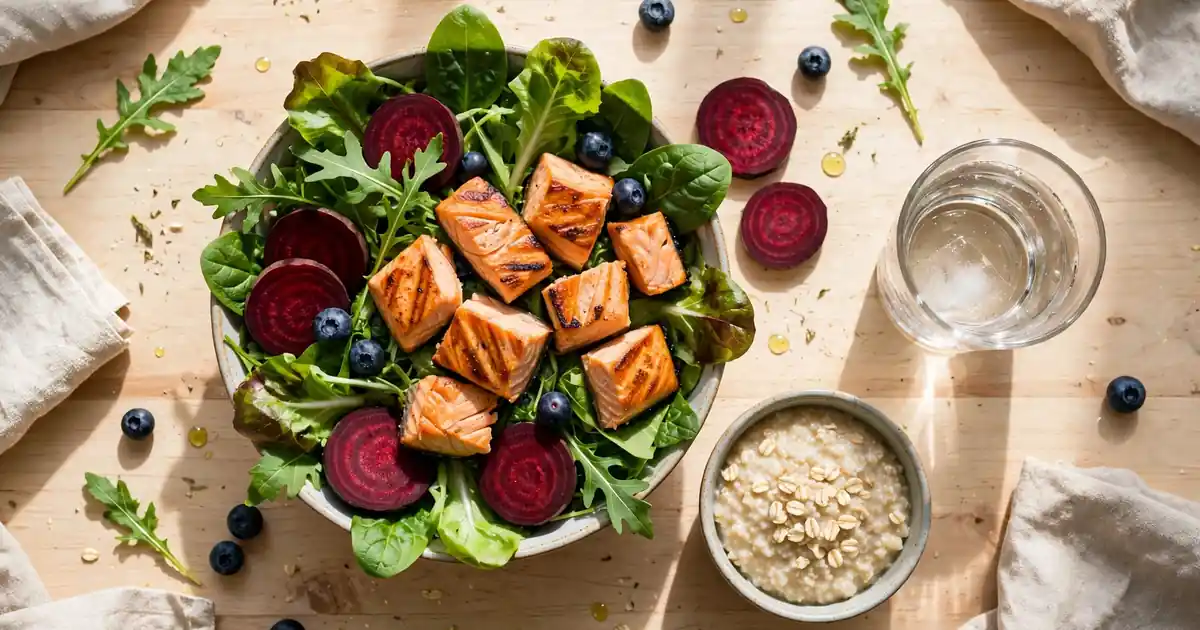
Salmon, mackerel and sardines are rich in omega-3 fats, linked by research with heart health and blood pressure support. Omega-3 fats may help reduce inflammation and help blood vessels work smoothly, and studies suggest eating fatty fish twice a week may support healthier blood pressure readings. Salmon also provides vitamin D and protein, which keep meals filling without salt or saturated fat, and that is one reason foods lower blood pressure guides include oily fish. Canned sardines and mackerel are cheaper than fresh salmon, with the same omega-3 fats.
Grill or bake salmon with lemon and herbs, and serve it with leafy greens or steamed vegetables. Sardines on wholegrain toast make a quick lunch, and tinned mackerel in salad works for busy days. Aim for two servings of fatty fish a week, each about the size of your palm; foods lower blood pressure most when fish replaces salty processed meats. If you do not eat fish, ask your doctor about other omega-3 sources.
6. Garlic
Garlic has been used in cooking and traditional medicine for centuries, and research suggests it may help support healthy blood pressure. Garlic contains allicin, which forms when a clove is crushed or chopped, and allicin may help blood vessels relax. Pooled trials suggest garlic supplements may lower systolic blood pressure by a few points, though food evidence is less direct. Even so, garlic adds strong flavour without salt, which may help you cook with less salt, a quiet way foods lower blood pressure in everyday cooking.
Crush garlic and rest it ten minutes before cooking, since this helps allicin form. Add it to soups, stews and roasted vegetables, or roast whole bulbs until soft and spread them on bread instead of salted butter. One or two cloves a day is reasonable for most people, and foods lower blood pressure quietly when garlic helps you use less salt. Garlic supplements are different: they can interact with blood-thinning medicine, so ask your doctor before taking them.
7. Walnuts and Other Nuts
Walnuts are rich in plant omega-3 fats, magnesium, fibre and arginine, an amino acid the body uses to make nitric oxide, which may help blood vessels relax. Research suggests a small handful of walnuts most days may help support healthier blood pressure and cholesterol, and foods lower blood pressure lists often include walnuts for this mix of nutrients, though nuts are energy-dense, so portion size matters. A small handful, about 30 grams, is enough. Almonds and pistachios carry similar nutrients.
Sprinkle chopped walnuts over oatmeal, salads or yoghurt, or eat a handful as an afternoon snack instead of crisps. Choose raw or dry-roasted nuts without added salt or honey, and store them sealed. If you have a nut allergy, skip this food entirely and rely on the other six in this guide. A daily handful is a habit that is easy to keep, and foods lower blood pressure a little more each day when nuts replace salty snacks.
How to Build a Blood-Pressure-Friendly Plate
A blood-pressure-friendly plate follows the DASH pattern: half vegetables and salad, a quarter whole grains, a quarter lean protein such as fish, beans or poultry. Add low-fat dairy on the side, and flavour food with herbs, lemon and garlic instead of salt. The Mayo Clinic guide to the DASH diet lists suggested servings. Our healthy foods guide lists everyday foods that fit this pattern. Building the plate this way makes the seven foods a natural part of lunch and dinner, and shows how foods lower blood pressure through the whole pattern.
Plan one change at a time so the new pattern lasts. Start by adding a salad to lunch, then swap white bread for wholegrain, then cut the salt in cooking by a quarter. Cook at home more often, since restaurant meals often carry far more salt than home cooking. Read labels and choose lower-salt products when you can. Over weeks, these small steps may help support healthier blood pressure, and foods lower blood pressure most reliably when the pattern is steady and enjoyable.
Foods to Limit When Blood Pressure Is High
Salt comes first: sodium holds water in the body and raises the volume of blood the heart must move. Most salt comes from processed foods, not the salt shaker, so bread, cheese, cured meats and ready meals need a close look. Aim for under 5 grams of salt a day, and use herbs to keep food tasty. Cutting salt is the other half: while foods lower blood pressure, salt pushes it the other way. A potassium salt substitute may help some people cut sodium, but anyone with kidney disease or on potassium-raising medicines should ask a doctor.
Sugary drinks add calories without nutrients, while alcohol can raise blood pressure. Fried foods and fatty meats add saturated fat, which may raise cholesterol and strain the heart — see our guide to mistakes that raise cholesterol. None of these foods needs to vanish forever, but eating them less often leaves more room for the seven foods in this guide, and that is how foods lower blood pressure in real life. Blood Pressure UK has a clear guide to healthy eating for blood pressure.
Foods That Lower Blood Pressure: Frequently Asked Questions
How quickly can foods that lower blood pressure make a difference?
Most studies find changes within a few weeks of steady eating, usually a few points rather than a large drop. Foods lower blood pressure gradually, because the nutrients work through the body over time rather than all at once. A single healthy meal will not change a reading, but a pattern kept for a month or more may help support healthier blood pressure. Keep measuring as your doctor advises, and do not expect food alone to fix a high reading.
Is the DASH diet the best eating plan for high blood pressure?
The DASH eating plan has the strongest research behind it for blood pressure, and doctors often suggest it first. It is rich in vegetables, fruits, whole grains, low-fat dairy, fish, beans and nuts, and low in salt, sugar and saturated fat. The DASH plan is rich in the same nutrients this guide covers, and foods lower blood pressure research often uses DASH as the reference pattern. Ask your doctor which pattern fits your health best.
Can I stop my blood pressure medicine if I eat these foods?
No. Food supports treatment; it does not replace it. Foods lower blood pressure only modestly, and stopping prescribed medicine can be dangerous, because pressure can rise again quickly without it. Some people find their doctor adjusts their medicine as their eating, weight and readings improve, but that decision belongs to the doctor alone. Keep taking your medicine as prescribed, eat the foods in this guide, and talk to your doctor about your readings at each visit.
Which foods should I avoid for high blood pressure?
The main foods to limit are salty processed foods, such as cured meats, ready meals, salty snacks, cheese and sauces, along with sugary drinks and alcohol. Fried foods and fatty meats add saturated fat, which may raise cholesterol and strain the heart. Cutting these back leaves more room for the foods in this guide, and foods lower blood pressure best when salty, processed foods take a smaller share of the plate.
Are beetroot juice and garlic supplements safe?
A small glass of beetroot juice or a serving of cooked beetroot is fine for most people, and foods lower blood pressure advice usually means food, not pills. Beetroot may colour urine pink for a day, which is harmless. Garlic supplements are different: they can interact with blood-thinning medicine and may affect blood sugar, so ask your doctor before taking them. Supplements are not regulated like medicines, and their strength varies, so food is the safer way to get these nutrients.
Final Thoughts on Foods That Lower Blood Pressure
The seven foods in this guide are ordinary, affordable and easy to cook, and together they show that foods lower blood pressure through steady, everyday eating rather than strict diets or special products. Leafy greens, berries, oats, beetroot, salmon, garlic and walnuts each bring different nutrients, and they work best as a team on the plate. Start with one or two foods this week, add more as they become habits, and keep salt low.
Daily walking also helps, and our walking guide explains how brisk walking may support healthy blood pressure and weight. Keep the pattern going, and talk to your doctor about your own readings and medicines, because foods lower blood pressure only as part of a fuller plan that includes movement, sleep and medical care. A steady plate, a daily walk and regular checks are a simple plan that most people can keep for life.
Disclaimer: This article is for educational and informational purposes only and is not medical advice. Always consult a qualified healthcare professional for any health concern.
1 Comment