
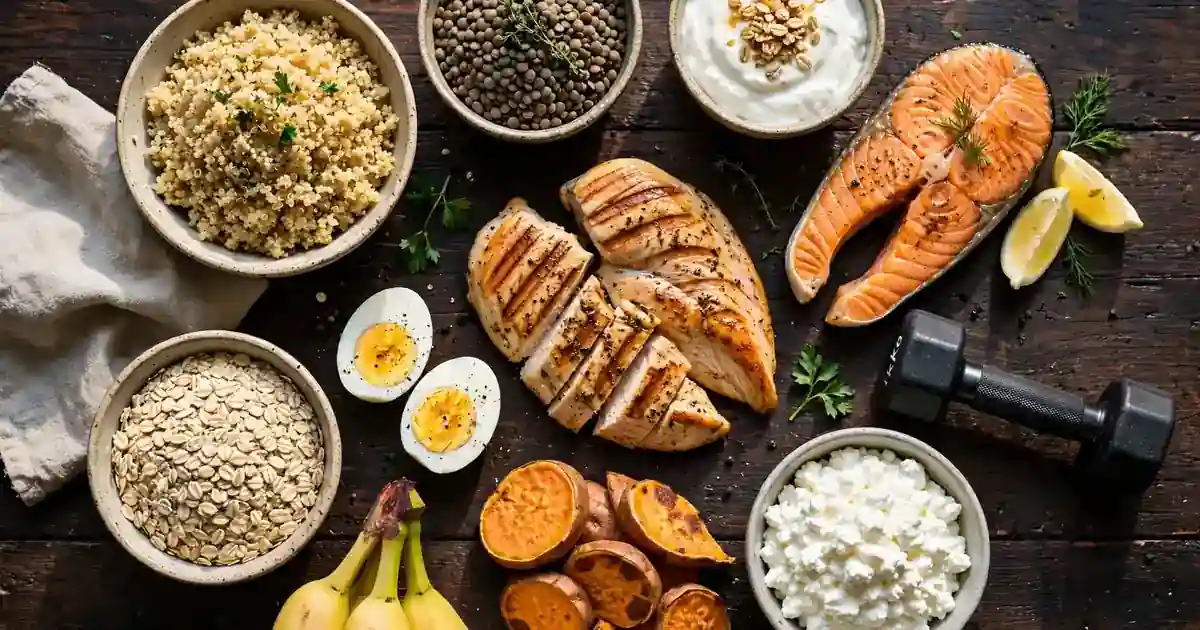
Gym diet plan is the eating strategy that decides whether your hours in the gym turn into real muscle, steady fat loss, or nothing at all. Many people train hard yet see little change, because their food does not support their training. A smart gym diet plan gives your body the protein to repair muscle, the carbohydrates to fuel hard sessions, and the healthy fats that keep your energy and hormones steady. This guide explains the 12 best powerful foods for muscle growth, how much protein you need, what to eat before and after gym sessions, and how to eat for muscle gain or fat loss.
Think of training as the signal and food as the material. Lifting weights tells your muscles to grow, but only food supplies the amino acids that build new muscle tissue. Running, cycling, or high-intensity training burns energy, and only food replaces it. Without enough protein, your muscles recover slowly and stay sore longer. Without enough carbohydrates, your training sessions feel flat. A good gym diet plan matches what you eat to how you train, so every workout has the fuel and the building blocks it needs. Food is the part most people ignore.
Why Your Gym Diet Plan Decides Your Results
Food decides results because muscle is built outside the gym, not inside it. During a workout you create tiny damage in muscle fibres, and your body repairs that damage between sessions, making the fibres slightly stronger each time. That repair needs protein, and it needs energy, and both come from food. People who eat enough protein and calories gain more strength from the same training than people who under-eat. Your gym diet plan is not a side project. It is half of the training itself.
Food also decides how you feel during training. A heavy, fatty meal right before a session can leave you sluggish, while training on an empty stomach can leave you weak and dizzy. The right meal at the right time gives you steady energy, protects your muscles, and helps you recover faster. Small, regular meals built around protein keep your appetite calm and make it easier to stay consistent. Consistency turns a gym diet plan into visible change, and visible change keeps you going back to the gym.
Protein Targets: How Much Protein Do You Really Need
Protein is the most important part of any gym diet plan, because it supplies the amino acids your muscles need to repair and grow. Most active adults who lift weights do well with about 1.6 grams of protein per kilogram of body weight each day. A 70 kilogram person would aim for roughly 112 grams of protein a day. Spread protein across meals, because your body uses about 25 to 40 grams well in one meal. Simple sources like eggs, chicken, fish, yogurt, lentils, and beans make the target easy to reach.
You do not need protein shakes to reach your target, although a shake can help on busy days. Whole foods bring extra nutrients with their protein, such as iron from red meat, calcium from yogurt, and fibre from beans. If you eat mostly plants, combine rice and beans, or lentils and whole grains, to cover all the essential amino acids. Twice-a-day trainers may need a little more protein. The key in any gym diet plan is to hit your target most days, because one good day cannot fix a week of low protein.
Pre and Post Workout Meals: What to Eat Before and After Gym
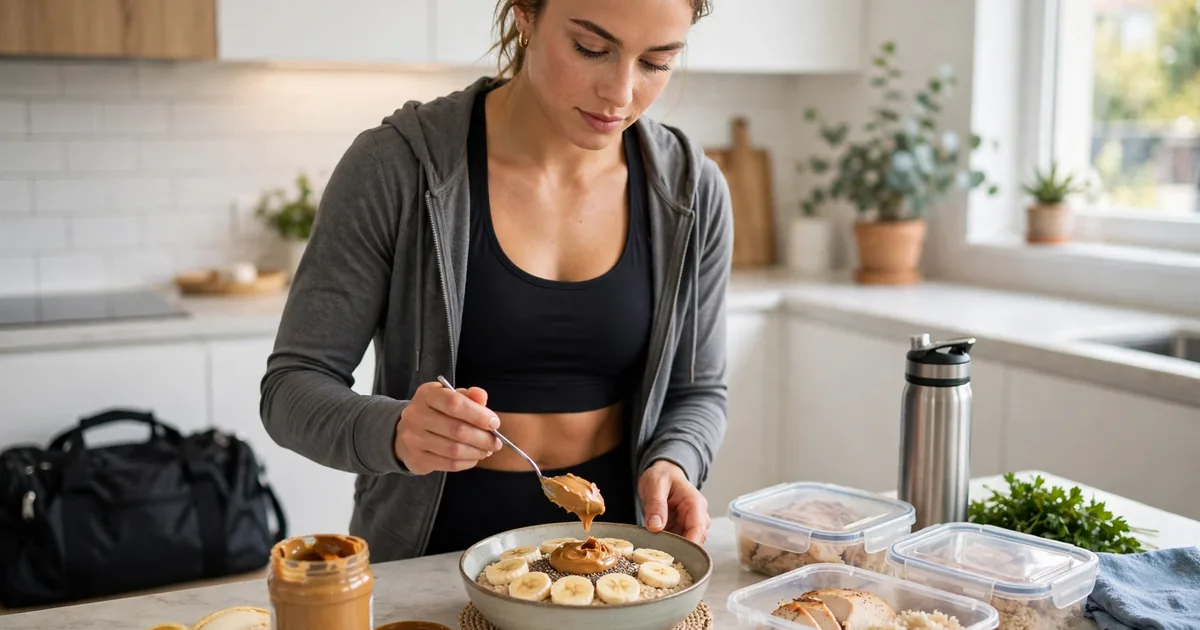
What to eat before and after gym sessions matters as much as your daily totals. Before a workout, eat a light meal with carbohydrates and a little protein about one to two hours ahead, so your muscles have fuel without a full stomach. Good choices are oats with banana or toast with eggs. After training, eat protein with carbohydrates within a couple of hours to start repair. A gym diet plan for muscle gain might use a larger post-workout meal, while a fat-loss plan keeps the same foods in smaller portions.
Timing in a gym diet plan is helpful, but it is not magic. Your total daily protein and calories matter more than the exact minute you eat. A small snack after training can help you feel better and reduce soreness. Water matters too, so drink before, during, and after your session. Avoid heavy fried food right before training, because fat slows digestion and can cause discomfort. If you train early, a banana can give you quick energy before a full breakfast after your session.
The 12 Best Powerful Foods for Muscle Growth
1. Chicken Breast
Chicken breast is the classic gym food for a reason. It gives you about 31 grams of protein in a 100 gram serving, with very little fat, so it fits both muscle gain and fat loss. Grill or bake it and pair it with rice or vegetables. Cook a few portions at once and keep them in the fridge for quick meals. A good gym diet plan starts with a reliable protein like chicken.
2. Eggs
Eggs are one of the cheapest complete proteins you can buy. One large egg gives you about 6 grams of protein with all nine essential amino acids, plus vitamins and healthy fats from the yolk. Boil them for a snack or scramble them for breakfast. Egg whites alone give you protein with fewer calories, which suits a fat-loss plan. That is why eggs belong in almost every gym diet plan.
3. Greek Yogurt
Greek yogurt packs about 10 grams of protein per 100 grams, with calcium for bones and probiotics for digestion. Choose plain yogurt and add fruit or nuts for flavour. It works as breakfast with oats, as a post-workout snack, or as a base for a savoury dip. It is soft and easy to eat after hard training. For a gym diet plan for weight loss, its high protein and low fat help you feel full on fewer calories.
4. Salmon
Salmon gives you protein and omega-3 fats in one food, which helps muscle recovery and joint health. A 100 gram serving gives you about 20 grams of protein, plus vitamin D and B vitamins. Grill it with lemon or add it to a salad. Oily fish twice a week supports heart health. Salmon fits a gym diet plan well, and if fresh salmon is expensive, tinned salmon or sardines give you similar benefits for much less money.
5. Lentils
Lentils are a plant protein that also brings fibre, iron, and slow carbohydrates. One cooked cup gives you about 18 grams of protein and plenty of fibre, which keeps you full for hours. They cook fast and cost very little. Pair lentils with rice or bread to cover all the essential amino acids. For anyone building a gym diet plan for muscle gain on plants, lentils are one of the strongest choices you can make.
6. Quinoa
Quinoa is a grain that contains all nine essential amino acids, which is rare for a plant food. One cooked cup gives you about 8 grams of protein plus fibre, magnesium, and iron. Cook it like rice and use it for bowls or salads. It is gluten-free and gentle on the stomach, so it works well before training. A steady gym diet plan often uses quinoa instead of white rice for extra protein and nutrients.
7. Sweet Potatoes
Sweet potatoes give you slow, steady energy with fibre, vitamin A, and potassium. They digest slowly, so they keep your energy even through a long session. Roast or mash them and pair them with chicken, eggs, or beans. Their natural sweetness makes them easy to enjoy without sauces. For muscle gain, they add healthy calories, and for fat loss, their fibre helps you feel full, so they fit both goals.
8. Oats
Oats are the classic pre-workout food, giving you slow carbohydrates, fibre, and a little protein. Oats with milk, banana, and peanut butter give you steady energy for a morning session. Oats are cheap, quick to cook, and easy to carry as overnight oats. Their soluble fibre supports healthy cholesterol. In a gym diet plan, oats work before training for fuel and after training as part of a recovery meal.
9. Cottage Cheese
Cottage cheese is rich in casein, a slow protein that feeds your muscles for hours. One cup gives you about 25 grams of protein with very little fat, which makes it a smart choice before bed. Eat it with fruit or on toast. It is soft and easy to digest late at night. Keep a tub in the fridge, and you have a useful high-protein snack at any hour.
10. Lean Beef
Lean beef gives you protein, iron, zinc, and vitamin B12, all of which support strength and energy. Choose lean cuts like sirloin, and keep portions moderate, about the size of your palm. Grill it with vegetables for a simple gym meal. Its iron is absorbed well, which helps tired trainers. A balanced gym diet plan can include lean beef a few times a week, with fish and plants on other days.
11. Chickpeas
Chickpeas give you protein, fibre, and slow carbohydrates in one cheap, filling food. One cooked cup gives you about 15 grams of protein and plenty of fibre, which supports digestion and steady energy. Roast them for a snack or blend them into hummus. They pair well with rice or whole-grain bread for complete protein. For a plant-based gym diet plan, chickpeas are a reliable base that never gets boring.
12. Bananas
Bananas are the simplest pre-workout food, giving you quick carbohydrates and potassium in a portable package. Eat one about 30 to 60 minutes before training for fast energy, or add one to a post-workout shake. Potassium helps your muscles work well. Bananas are cheap and pair with oats, yogurt, or peanut butter. Every good gym diet plan keeps a bunch of bananas in the kitchen for busy training days.
Bulk vs Cut: Eating for Muscle Gain or Fat Loss
A gym diet plan for muscle gain and a gym diet plan for weight loss use the same foods, but different amounts. To gain muscle, eat about 200 to 300 extra calories a day, with plenty of protein and regular strength training. That small surplus builds muscle without adding much fat. To lose fat, eat about 300 to 500 fewer calories a day, while keeping protein high so you lose fat, not muscle. Both goals need patience, because real change takes weeks, not days.
Do not chase fast results with extreme diets. A very low calorie diet can cost you muscle, while a very high calorie bulk adds fat faster than muscle. Track your weight once a week and adjust your portions slowly. If your weight is steady and your lifts are rising, it is working. If your weight climbs too fast, trim a little carbohydrate. Small, steady changes beat big, short-lived efforts every time. Stay patient, because slow progress still counts.
Hydration and Meal Timing
Water is part of your diet too. Even mild dehydration can lower your strength and make a session feel harder than it should. Drink water through the day, every day, and take a bottle to the gym. Most people need about 2 to 3 litres a day, and more on hot days or long sessions. After very sweaty workouts, an electrolyte drink helps, but plain water is enough for most sessions under an hour.
Meal timing works best when it fits your life. Eat three main meals and one or two snacks, with protein in each one. Morning trainers can eat a light snack first and a full breakfast after. After-work trainers can eat lunch well and a small snack an hour before the gym. A simple, regular pattern beats a perfect plan you cannot follow. Your gym diet plan should fit your job, your family, and your sleep every day, not fight them.
Common Gym Diet Mistakes to Avoid
The most common gym diet mistakes are easy to avoid. Skipping protein at breakfast leaves you short all day, because one big dinner cannot make up for it. Sugary drinks add calories without fullness and can undo a good week of training. Relying only on supplements while eating poorly is another trap, because no powder replaces real food. A gym diet plan works when your meals use the 12 foods above, your protein is spread across the day, and your portions match your goal. Keep it simple and regular, and the results will follow.
Gym Diet Plan: Frequently Asked Questions
How much protein do I need each day?
Most people who lift weights do well with about 1.6 grams of protein per kilogram of body weight each day. A 70 kilogram person would aim for roughly 112 grams, spread across three or four meals. Beginners, older adults, and people losing fat may need a little more. Whole foods like eggs, chicken, yogurt, and lentils can cover the target without supplements.
What should I eat before a workout?
Eat carbohydrates and a little protein one to two hours before training. Oats with banana, toast with eggs, or yogurt with fruit are good choices. Avoid heavy fried food right before a session, because it digests slowly. If you train early, a banana gives you quick energy, and you can eat a full breakfast after your workout.
Can I follow a gym diet plan for weight loss and muscle gain at the same time?
Beginners and people returning after a break can often do both for a while, by eating near maintenance calories with high protein and regular strength training. Later, focus on one goal at a time. A small calorie deficit keeps muscle while losing fat, and a small surplus builds muscle with little fat gain.
Do I need supplements for a gym diet plan?
No, supplements are optional. A good diet built from whole foods can cover your protein, vitamins, and minerals. Protein powder can help on busy days, and creatine has good evidence for strength, but neither replaces real food. Choose trusted brands and keep the dose simple. Food first, supplements second, is the rule that works.
How long does it take to see results from a gym diet plan?
Most people notice better energy within two to four weeks, and visible changes in four to eight weeks, if they train regularly and eat to their goal. Muscle grows slowly, about a few hundred grams a month for most people. Track your lifts and take photos, because numbers tell the truth. Stay patient, and keep your plan steady.
Final Thoughts: Build Your Gym Diet Plan for Life
A gym diet plan is not a short diet. It is a way of eating that supports your training for years. Start with protein in every meal, build your plate around the 12 foods here, drink enough water, and match portions to your goal. You do not need perfect meals, only regular ones. Train hard, eat well, rest properly, and your body will change. Pick one change for today, keep it for a month, then add the next. That is how a simple plan becomes a strong body.
Disclaimer: This article is for educational and informational purposes only and is not medical advice. Always consult a qualified healthcare professional for any health concern.

Author Profile by Health Physical Fitness
I write evidence-based educational articles on health, fitness, wellness, nutrition, diet, weight management, healthy foods, lifestyle and skincare. All articles are for educational and informational purposes only, not medical advice.
1 Comment