
What Stretching Exercises for Beginners Really Mean
Stretching exercises beginners often ask one simple question first: where do I start? The answer is gentler than most people expect, because good stretching is slow, calm, and controlled. If you are looking for stretching exercises for beginners, this guide gives you five safe moves, a weekly plan, and form cues that protect your joints. You need no equipment, only a little floor space and ten quiet minutes. Each move below takes about a minute, and together they loosen the neck, shoulders, chest, hips, and spine. Stretching exercises beginners should also keep water nearby and wear comfortable clothes.
For stretching exercises beginners, the biggest surprise is how quickly the body responds. Muscles that feel stiff in the morning often ease after a few slow breaths, and a daily ten-minute routine can change how you move within two weeks. Stretching works best when it is gentle and regular, not forceful and rare. Think of it as daily care for your muscles, like brushing your teeth, rather than a workout you must survive. Small, steady practice beats one long session every time.
Stretching also teaches you to notice your body. A tight neck after desk work, stiff hips after sitting, or a sore lower back after gardening are all signals worth hearing. Regular movement helps you spot these signals early, and gentle stretching answers them before they grow into real pain. Stretching exercises beginners who practise slowly learn which areas need attention and which moves help most. That body awareness is a skill that stays useful for life.
Why Stretching Works So Well
Stretching works because muscles and joints respond to gentle, sustained tension. When you hold a stretch for twenty to thirty seconds, the muscle fibres relax and lengthen a little, and blood flow to the area improves. Research supports regular flexibility work as part of a healthy routine, alongside strength and aerobic activity. For stretching exercises beginners, even a short daily session can ease stiffness and make everyday movements, like reaching overhead or bending down, feel easier.
Another reason stretching helps is that it calms the nervous system. Slow breathing during a stretch tells the body it is safe to relax, which lowers muscle guarding after a long day. Stretching exercises beginners often notice better sleep after an evening routine, because the body shifts into rest mode more easily. That calm feeling is not imaginary: gentle movement and deep breathing reduce tension in the shoulders, jaw, and lower back, where stress likes to hide.
Stretching also protects your range of motion as you age. Joints that move through their full range stay healthier, and muscles that stay flexible support better posture. Stretching exercises beginners who stretch after walking or light exercise keep their hips and hamstrings supple, which helps balance and lowers the chance of strains. You do not need to be flexible to start; flexibility is the result, not the entry ticket. Stretching exercises beginners can start with just five minutes a day.
5 Best Powerful Stretching Exercises for Beginners
These five moves form a complete routine for the whole body. Together they cover the neck, shoulders, chest, hamstrings, hips, and spine, which are the areas that stiffen first in daily life. Stretching exercises beginners should learn each move slowly, breathe normally, and never bounce. Hold each stretch for twenty to thirty seconds, repeat it twice, and rest for a few breaths between moves. Stretching exercises beginners can finish the whole routine in about ten minutes.
1. Neck Release Stretch
The neck carries tension from desk work, phone use, and stress, so this gentle release is a good place to start. Sit tall in a chair with both feet flat on the floor and shoulders relaxed. Slowly tilt your right ear toward your right shoulder until you feel a mild pull on the left side of your neck. Hold for twenty seconds while breathing slowly, then return to centre and repeat on the other side. Keep your shoulders down and your face relaxed. Stretching exercises beginners can do this move anywhere, even at a desk.
For stretching exercises beginners, the key is patience. Never pull your head with your hand and never force the range. If you want a deeper stretch, let your hand rest lightly on the side of your head for gentle weight only. Stop if you feel sharp pain, tingling, or dizziness. Two slow rounds on each side are enough, and the move works well during a work break or before bed.
2. Shoulder and Chest Opener
Hours of sitting round the shoulders forward and tighten the chest, so this opener reverses that pattern. Stand tall with feet hip-width apart, clasp your hands behind your back, and gently straighten your arms. Lift your hands slightly away from your body while opening your chest and drawing your shoulder blades together. Hold for twenty to thirty seconds, breathing deeply, then release slowly. You should feel a broad stretch across the chest, not pain in the shoulders.
If clasping your hands is hard, hold a towel between them instead. Stretching exercises beginners with tight shoulders can also do this move seated, with the same arm position and tall posture. Keep your ribs down and avoid arching your lower back. Repeat twice, and notice how much taller you stand afterwards. This move pairs well with the neck release above, and together they undo a full day at a desk.
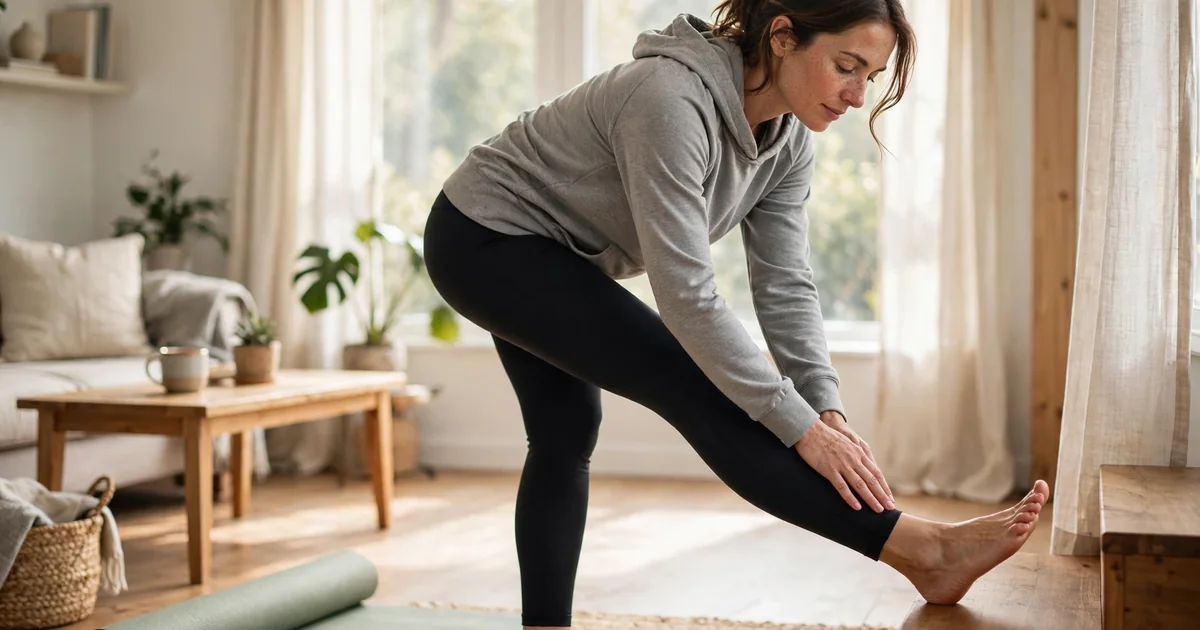
3. Standing Hamstring Stretch
Tight hamstrings pull on the lower back and make bending down harder, so this stretch helps the whole back chain. Stand facing a low step or sturdy chair, place your right heel on it with toes pointing up, and keep your standing leg soft. Hinge forward from your hips with a straight back until you feel a gentle pull behind your thigh. Hold for twenty to thirty seconds, then switch legs. Keep your back long rather than rounding it. Stretching exercises beginners should keep the step low and the movement slow.
For stretching exercises beginners, the hinge matters more than the depth. A small forward fold with a flat back stretches the hamstring far better than a deep bend with a rounded spine. Breathe out as you fold, and let the stretch deepen slowly on its own. If your balance wobbles, hold a wall or chair. Two rounds per leg after a walk or light workout work best, when muscles are warm.
4. Kneeling Hip Flexor Stretch
Sitting all day shortens the hip flexors, the muscles at the front of the hips, which can tug the lower back forward. Kneel on your right knee with your left foot flat on the floor in front of you, like a low lunge. Gently shift your weight forward until you feel a mild stretch at the front of your right hip. Keep your torso tall, squeeze your right glute lightly, and hold for twenty to thirty seconds before switching sides.
Stretching exercises beginners should keep the movement small and controlled. You only need a gentle shift forward, not a deep lunge, and your front knee should stay over your ankle. If kneeling hurts, place a folded towel under your knee or do the stretch standing with one foot behind you. Breathe slowly and release any tension in your shoulders. Two rounds per side will loosen hips that have sat all day.
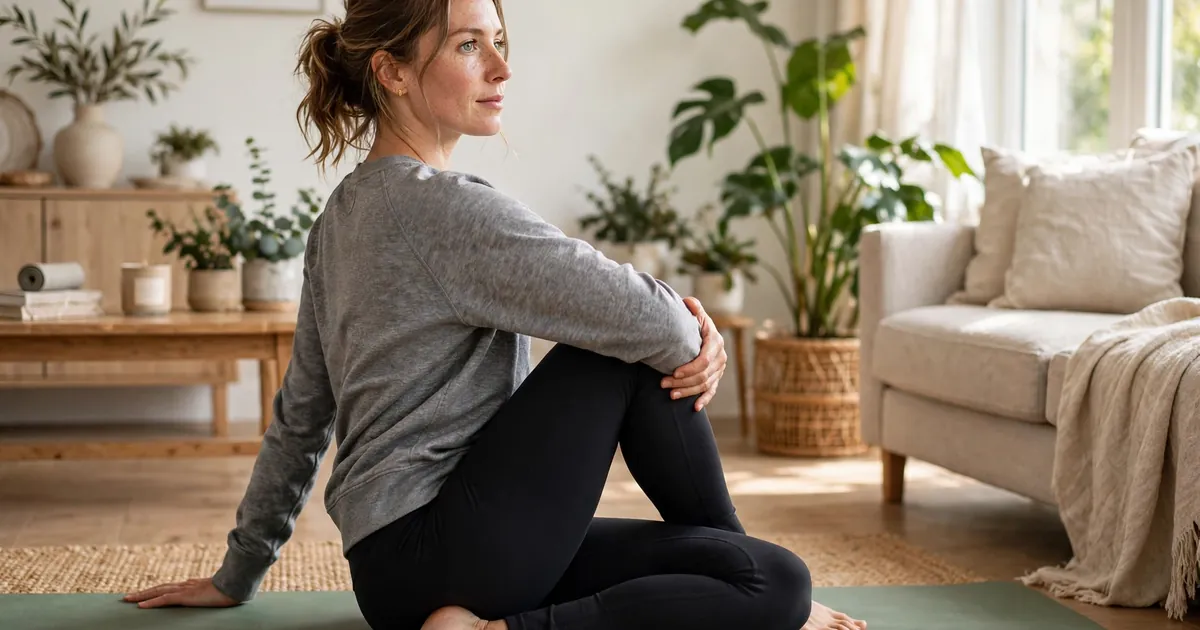
5. Seated Spinal Twist
The spine loves gentle rotation, and this seated twist keeps it mobile without strain. Sit on the floor with legs stretched out in front of you, then bend your right knee and place your right foot flat outside your left thigh. Put your right hand behind you for support and hug your right knee with your left arm. Twist slowly to the right, looking over your right shoulder, and hold for twenty to thirty seconds. Breathe deeply, then switch sides. Stretching exercises beginners can sit on a folded blanket for comfort.
For stretching exercises beginners, the twist should feel like a wringing out, never a wrench. Move only as far as your body allows, keep both sitting bones on the floor, and let each breath carry you a fraction further. Never force the twist or jerk into position. This move is a calm way to finish the routine, and it leaves the back feeling loose and the breathing slow and steady.
How to Stretch Safely
Safe stretching starts with warm muscles. Stretching exercises beginners should warm up first with five minutes of easy movement, like marching in place, arm circles, or a short walk, before holding any stretch. Cold muscles resist lengthening, and pulling on them can cause strains. Think of warming up as switching the muscles on before asking them to stretch, and never skip it, even for a ten-minute routine.
The golden rule is simple: never force a stretch and stop if it hurts. A mild pull is normal, but sharp pain, tingling, or numbness means you have gone too far, so ease off at once. Stretching exercises beginners should breathe normally through every hold, because holding your breath tenses the very muscles you want to relax. If a stretch hurts the next day, shorten the hold next time. Gentle progress over weeks is the goal, not a dramatic result today.
A Simple Weekly Stretching Plan for Beginners
This plan uses five short sessions a week, and each one takes about ten minutes. Stretching exercises beginners can follow it for four weeks, then add five seconds to each hold. Stretch after a walk, after light exercise, or in the evening when the body is warm. Finish with slow breathing and notice how your body feels.
- Monday: all five moves, two rounds each, after your morning walk.
- Tuesday: neck release, shoulder opener, and spinal twist, before bed.
- Wednesday: all five moves, two rounds each, after light exercise.
- Thursday: rest day, or one gentle round of the neck and hip moves only.
- Friday: all five moves, two rounds each, after your morning walk.
- Weekend check: add five seconds to each hold if the week felt easy.
For stretching exercises beginners, the plan works because it repeats the same five moves often enough for the body to adapt. Repeating moves is not boring, it is how muscles learn to relax and lengthen. If a session feels too easy, add seconds before adding new stretches. If a session feels too hard, cut one round and finish calmly. The goal is to end each week feeling looser, not sore.
Mistakes That Slow Your Progress
The most common mistake is bouncing during a stretch. Bouncing triggers a reflex that tightens the muscle, which is the opposite of what you want, and it can cause small strains. Stretching exercises beginners should hold each stretch still for twenty to thirty seconds and let the muscle release slowly. Another mistake is skipping the warm-up, which leaves cold muscles stiff and unwilling to lengthen. Five minutes of easy movement is enough.
Holding your breath is the second big mistake. Many beginners tense up and forget to breathe, which keeps muscles guarded and the stretch shallow. Breathe slowly and deeply through every hold, and let each breath out carry you a little deeper. Finally, remember that stretching should never hurt: pain is a stop sign, not a challenge. Warm up well, stretch gently, and rest when your body asks.
Stretching Exercises Beginners: Frequently Asked Questions
How often should stretching exercises for beginners be done?
Five short sessions a week is a good target for most people, with each session lasting about ten minutes. Daily stretching is fine too, as long as every stretch stays gentle and pain-free. If you are very stiff, start with three sessions a week and add more when the routine feels easy. Rest days matter as well, because muscles adapt during recovery. Listen to your body: if you feel sore the next day, take a day off and shorten the holds.
How long should I hold each stretch?
Hold each stretch for twenty to thirty seconds, breathing slowly and normally. That is long enough for the muscle to relax and lengthen a little, without tiring it out. Stretching exercises beginners sometimes hold for only five seconds, which is too short to help, or for two minutes, which can leave muscles feeling weak. Two rounds of twenty to thirty seconds per move is a solid routine that fits into ten minutes.
Should I stretch before or after exercise?
Stretch after exercise, or after a five-minute warm-up, when muscles are warm and ready. Stretching cold muscles before a workout can reduce strength for a short time and raises the risk of strains. Before exercise, use dynamic movement instead, like leg swings and arm circles, which prepare the body without long holds. Save the gentle static stretches in this guide for after your walk, run, or workout, or for the evening.
Is stretching safe for people with back pain?
Gentle stretching can help many kinds of back stiffness, but pain needs respect. Stretching exercises beginners with back pain should choose mild moves, keep the range small, and stop at once if pain sharpens or shoots down a leg. The spinal twist and hamstring stretch in this guide are gentle choices when done slowly. Anyone with ongoing back pain, a recent injury, or a diagnosed spine condition should check with a doctor or physiotherapist before starting.
Can stretching help me lose weight?
Stretching alone burns very few calories, so it will not drive weight loss by itself. What it does is keep you moving comfortably, which supports walking and other activity that does burn calories. Stretching exercises beginners who stretch after walks often walk further and more often, because stiff legs stop complaining. Think of stretching as a partner to walking and healthy eating, not a replacement for them.
What should I do if a stretch hurts?
Stop the stretch at once and ease back to a comfortable position. Sharp pain, tingling, numbness, or pain that lasts after you stop are all signs to back off. Try a smaller range, a shorter hold, or a different version of the move. Stretching exercises beginners should never push through pain, because pain means the tissue is asking for less, not more. If pain keeps returning with the same move, skip it and ask a doctor or physiotherapist for advice.
Final Thoughts on Your Stretching Journey
Stretching exercises beginners who start small and stay steady often surprise themselves. Five moves, ten minutes a day, and a little patience are enough to loosen a stiff body and calm a busy mind. Focus on warm muscles, gentle holds, and slow breathing, and let the results build week by week. Stretching is a small habit with a large return, and your body is worth the ten minutes.
Begin today with one short session, even if it is only the five moves done once through. Stretching exercises beginners do not need a perfect plan, they need a first step and a second one after it. Four weeks from now, compare how you move with today and enjoy the proof that gentle stretching works. Then set a new goal, add five seconds to each hold, and keep going.
Disclaimer: This article is for educational and informational purposes only and is not medical advice. Always consult a qualified healthcare professional for any health concern.
