Protein per day is the number most people get wrong about their diet, yet it shapes how strong you feel, how fast you recover, and how steady your energy stays. Many people eat far less protein than their body needs, while others eat far more than they can use. This guide gives you 9 best powerful facts about your daily target, so you can work out the right amount for your body, your age, and your activity level, without guesswork or fad diets.
Protein is not only for gym goers and athletes. Every cell in your body uses protein to build and repair tissue, make enzymes and hormones, and support your immune system. Your body cannot store protein the way it stores fat, so the amount you eat each day matters more than any single meal. When your daily intake is too low for weeks, you may feel tired, recover slowly from exercise, and lose muscle without noticing.
What Does Protein Per Day Mean for Your Body?
Protein per day means the total grams of protein you eat across a whole day, from breakfast to your last meal. It is a daily total, not a per-meal rule, and your body adds up everything you eat. A target only works when you count the full day, because a protein-rich dinner cannot make up for a day of low-protein meals.
Think of your daily total as a budget. Every meal adds grams to that budget, and small amounts from foods like bread, rice, and vegetables count too, even though they are not rich sources. Once you know your target, you can spread it across three or four meals, which keeps your body supplied through the day and makes the target far easier to reach.
Protein Per Day: 9 Best Powerful Facts for Your Health
Here are 9 best powerful facts about protein per day, each one explained in plain words. Read them in order to build a full picture, or jump to the fact that matches your goal. Together they show how to set your target, how to reach it with real food, and which mistakes to avoid.
1. Your Minimum Target Is Lower Than You Think
The official minimum for most adults is 0.8 grams of protein per kilogram of body weight each day. For a person who weighs 70 kilograms, protein per day works out to 56 grams, which is less than many people expect. That figure is a floor to prevent deficiency, not an ideal target for health, and active people, older adults, and anyone losing weight usually need more.
The minimum was set for healthy, mostly inactive adults, so treat it as a starting point rather than a goal. If you train, walk a lot, or do physical work, your body repairs more tissue and uses more protein. Starting from the minimum and adding a little for your activity level is a safer way to set your target.
2. Activity Level Changes the Number
Activity changes your target more than any other factor. A desk worker who rarely exercises may do well near the minimum, while a regular runner or gym goer often needs 1.2 to 1.6 grams per kilogram. For an 80-kilogram runner, protein per day can reach 96 to 128 grams, which is roughly double the minimum and far above what most people eat.
Exercise creates tiny damage in muscle fibres, and protein provides the building blocks for repair. The harder and more often you train, the more repair work your body must do, and the more protein it needs. Rest days still need protein, because repair continues for a day or two after a hard session, so keep your intake steady all week.
3. Muscle Building Needs More Protein
If your goal is muscle growth, research points to 1.6 to 2.2 grams per kilogram each day, combined with regular strength training. For a 75-kilogram lifter, protein per day lands between 120 and 165 grams, spread across four meals of 30 to 40 grams each. That spread matters, because each meal with enough protein gives muscle growth a fresh signal.
More protein beyond that range rarely builds extra muscle, because training and total calories matter more once the target is met. Extra grams beyond your target often come from foods that crowd out fruit, vegetables, and whole grains. Set the target, train hard, and let the food support the work rather than trying to replace it.
4. Older Adults Need More, Not Less
After the age of 50, your body becomes less efficient at using protein, so older adults need more per kilogram, not less. Many experts suggest 1.0 to 1.2 grams per kilogram, which means protein per day for a 65-kilogram older adult is about 65 to 78 grams. That higher intake helps protect muscle strength and balance as you age.
Muscle loss with age, known as sarcopenia, speeds up when protein is low and movement is rare. Pairing enough protein with light strength exercise, such as bodyweight squats and walking uphill, protects independence far better than either step alone. If you have a health condition or take medicine, ask your doctor before changing your diet.

5. Weight Loss Works Better With Enough Protein
Protein helps weight loss in two ways: it keeps you full for longer, and it protects muscle while you eat fewer calories. A target of 1.2 to 1.6 grams per kilogram works well during weight loss, so protein per day for a 90-kilogram person aiming to lose weight is about 108 to 144 grams. That may sound high, but it stops hunger from driving extra snacking.
Protein also takes more energy to digest than carbohydrate or fat, which gives your metabolism a small lift. Meals built around eggs, yogurt, lentils, or fish keep you satisfied for hours, while low-protein snacks leave you hungry again within an hour. Drink enough water too, because a higher-protein diet needs good hydration.
6. Spreading Protein Across Meals Helps
Your body uses protein best when it arrives in steady amounts through the day, rather than all at once in a single meal. Aim for 20 to 40 grams at each main meal, and protein per day becomes a simple habit: a protein-rich breakfast, a solid lunch, and a proper dinner, with a snack if you need one. Most people eat almost no protein at breakfast, which wastes the first chance of the day.
Each meal with enough protein switches on muscle repair for a few hours, so three or four switches a day beat one large switch at dinner. Breakfast is the easiest meal to fix: add eggs, yogurt, or cottage cheese, and your day starts with 20 grams already banked. Small changes at breakfast often fix a low daily total without any extra effort.
7. Your Body Weight Decides the Math
The maths is simple once you know your weight and your activity level. Multiply your weight in kilograms by the factor that fits you: 0.8 for a quiet lifestyle, 1.2 for regular exercise, and 1.6 for hard training. For example, a 70-kilogram person who trains three times a week needs about 84 grams, and protein per day for an 80-kilogram person in hard training reaches 128 grams.
If you carry extra weight, use a healthy target weight for the maths rather than your current weight, because body fat needs far less protein than muscle. A dietitian can set a personal factor for you, especially if you are pregnant, ill, or recovering from surgery. Recheck your number every few months, as your weight and activity will change.
8. Food First Beats Powder for Most People
Most people can reach their target from food alone, without any powder. Eggs, milk, yogurt, lentils, beans, chicken, and fish all carry useful amounts, and protein per day from a normal mixed diet often reaches 80 to 100 grams without trying. A shake is useful only when you are short on time, travelling, or struggling to eat enough.
Whole foods also bring vitamins, minerals, and fibre that a powder cannot match, so food should stay first. If you want a plant-versus-animal comparison before choosing your sources, read our plant protein vs animal protein guide, which looks at both sides in detail. Keep your plate varied, and let supplements fill gaps rather than replace meals.
9. Too Much Protein Has Limits Too
Very high protein intakes do not build extra muscle, and they can push out other foods your body needs. Extremely high amounts may also strain the kidneys in people who already have kidney disease, so protein per day should stay within a sensible range for your body. More is not always better, and the right target beats a bigger one.
A sensible ceiling for most healthy adults is around 2.2 grams per kilogram, and staying hydrated matters as you raise your intake. People with kidney disease, liver problems, or other health conditions should ask a doctor before adding protein, because their safe range may be lower. The MedlinePlus guide to protein in the diet explains when extra protein needs medical advice.
How to Calculate Your Protein Per Day in 3 Steps
Work out your number in three steps. First, weigh yourself in kilograms, or divide your weight in pounds by 2.2. Second, choose your factor: 0.8 if you are mostly inactive, 1.2 if you exercise a few times a week, and 1.6 if you train hard. Third, multiply your weight by your factor, and protein per day is the answer: a 70-kilogram person who exercises regularly needs about 84 grams.
Test your number for two or three weeks and watch how you feel: steady energy, good recovery, and less hunger between meals are signs the target fits. If you still feel tired or sore for days after training, add 10 to 15 grams and test again. Your target is a guide, not a strict rule, so adjust it as your training and weight change.
Keeping a short food diary for a week makes the maths real. Note what you eat, check the protein grams on labels, and add them up each evening. Once you know your protein per day target, the diary shows whether you hit it or fall short, and which meal needs help. Most people find one weak meal, usually breakfast, and fixing that single meal closes most of the gap.
Protein Per Day From Food: Simple Sources
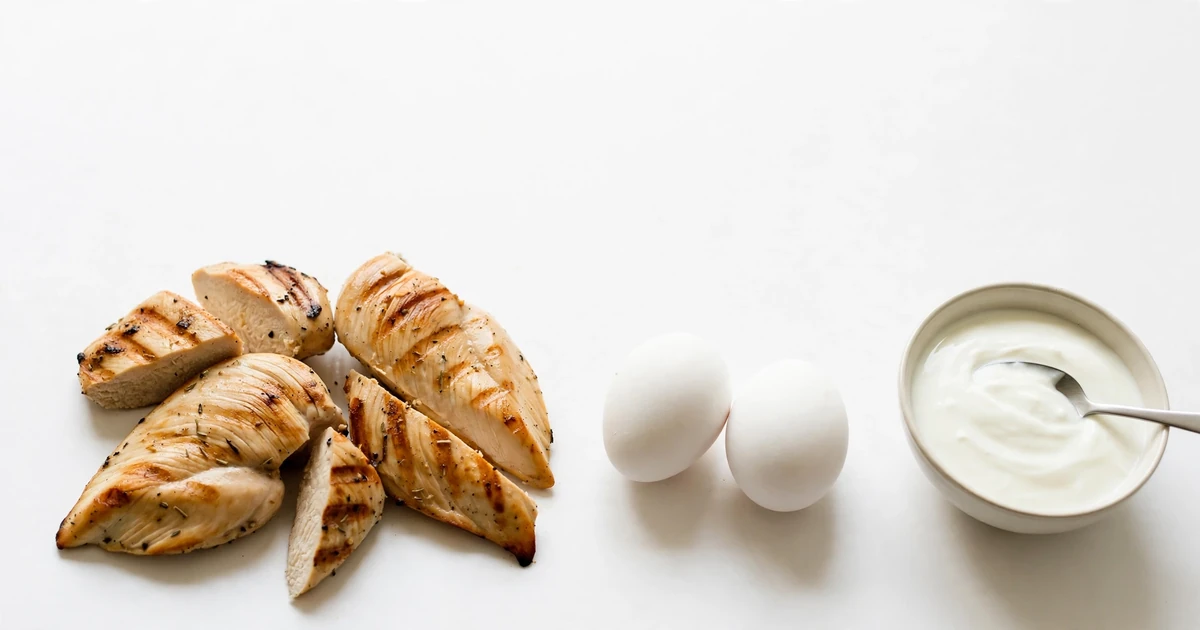
Simple foods cover the target faster than most people think. One large egg gives about 6 grams, a cup of Greek yogurt gives 15 to 17 grams, and 100 grams of chicken gives about 31 grams. A cup of cooked lentils gives about 18 grams, a glass of milk gives 8 grams, and protein per day from three ordinary meals can pass 90 grams without any supplements.
Mix animal and plant sources through the day to cover all the amino acids your body needs. Our healthy foods guide lists more options that fit a balanced diet, and the Harvard Nutrition Source guide to protein explains how much protein different foods provide. Keep the foods you enjoy, rotate them through the week, and your target will take care of itself.
Snacks can add useful grams without a big meal. A small handful of almonds gives about 6 grams, a matchbox-sized piece of cheese gives about 7 grams, and a boiled egg gives about 6 grams. A cup of milk with a peanut butter sandwich is a simple evening snack that adds 15 grams or more. Choose snacks that carry protein rather than only sugar, and your daily total climbs without extra cooking or planning. Keep them ready in your fridge or desk drawer for busy working days.
Mistakes to Avoid With Protein Per Day
The most common mistake is skipping protein at breakfast, then trying to catch up at dinner, which leaves the morning wasted. A second mistake is guessing your intake instead of checking labels for a week, so protein per day stays a mystery rather than a number. A third mistake is relying only on shakes, which fills the target but misses the nutrients that whole foods provide.
A fourth mistake is keeping the same target all year while your training changes. Hard training weeks need more protein, and quiet weeks need less, so adjust the number with your routine. Track your intake for one week every few months, and you will spot gaps before they become habits.
Protein Per Day: Frequently Asked Questions
How much protein per day do I need if I do not exercise?
If you do not exercise, the minimum of 0.8 grams per kilogram is a fair starting point, which means protein per day for a 70-kilogram adult is about 56 grams. Most people feel better a little above the minimum, so 1.0 grams per kilogram is a practical target. Spread it across three meals and you will cover your needs easily.
Can I eat all my protein per day in one meal?
You can eat it in one meal, and your body will digest it, but your muscles use protein better when it is spread across the day. Three or four meals with 20 to 40 grams each give your muscles repeated signals to repair and grow. One huge meal wastes much of that benefit, so spread it out.
Is protein per day different for vegetarians?
The target is the same for vegetarians, but the foods change: beans, lentils, tofu, dairy, eggs, and whole grains must cover the total. Mixing plant foods through the day, such as beans with rice or lentils with seeds, covers all the amino acids you need. A little planning at each meal makes it easy.
Does protein per day change with age?
Yes, it rises with age, because older bodies use protein less efficiently and lose muscle faster. Most experts suggest 1.0 to 1.2 grams per kilogram after 50, so protein per day for a 65-kilogram older adult is about 65 to 78 grams. Pair it with strength exercise for the best effect.
Should I use a protein per day calculator?
A calculator gives a useful starting point, because it applies the same weight-based maths in seconds. Treat its answer as a guide, not a prescription, and adjust it by how you feel, how you train, and what your doctor advises. Your real needs depend on your body, not only on a formula.
Final Thoughts on Protein Per Day
Your daily target is simpler than the diet world makes it sound: weigh yourself, pick a factor for your activity, multiply, and spread the result across your meals. Food first, powder only when needed, and a steady intake beats any single perfect meal. Nine facts, one number, and a habit you can keep for life.
Start tomorrow morning: add eggs or yogurt to breakfast, check the labels on your usual foods for one week, and see where your number lands. If you have kidney disease, are pregnant, or take medicine, ask your doctor before raising your intake. Small, steady steps build lasting health, and protein is one of the simplest places to start.
Disclaimer: This article is for educational and informational purposes only and is not medical advice. Always consult a qualified healthcare professional for any health concern.