

Running beginners often ask the same question: how do I start running when I have never run before? The answer is simpler than most people expect. You only need a pair of comfortable shoes, a simple plan, and the patience to build up slowly. This guide gives you a clear running beginners plan that takes you from your first short walk to a steady thirty-minute run. You will learn shoe choice, pacing, breathing, and injury prevention. Follow the five steps below and running will soon feel natural.
Running is one of the cheapest and simplest ways to get fit. You need no gym membership, no class booking, and no special skill. The World Health Organization recommends adults get at least 150 minutes of moderate activity each week, and running is one of the fastest ways to reach that target. For running beginners, even short runs count, because every run builds heart strength, leg strength, and confidence. The hardest part is the first week, and this guide is built to get you through it without pain or burnout.
Why Running Is a Great Choice for Beginners
Running works your whole body in a way few exercises can match. Each step strengthens your heart, lungs, legs, and core, while burning calories and lifting your mood. Studies link regular running with lower blood pressure, better sleep, and a lower risk of heart disease. For running beginners, the mental benefits often arrive first: a short run can clear a busy mind and leave you calmer. Running also fits real life. You can run before work, on a lunch break, or after dinner. That convenience is why so many people who start running keep running for years.
Running is also easy to measure, and that keeps motivation high. You can track time, distance, and pace with a free phone app, and you will see progress within a few weeks. A walk that once left you breathless becomes a slow jog, then a steady run. New runners who track their runs often find the numbers addictive, because each small improvement proves the plan is working. Your only race is against last week, and that is a race you can win every single week. Start where you are, and let the numbers grow.
Running Beginners: 5 Best Powerful Steps to Start Running
The five steps below form one complete plan. Each step builds on the one before it, so work through them in order. Step one sorts out your shoes and kit. Step two gives you a run-walk schedule. Step three teaches pacing and breathing. Step four builds your stamina week by week. Step five keeps you injury free. Together they answer the question every new runner asks. Running beginners who follow all five steps reach a thirty-minute run far more often than those who simply lace up and sprint on day one.
Step 1: Get the Right Shoes and Gear
Good shoes are the single most important purchase for running beginners. You do not need the most expensive pair, but you do need shoes made for running, not fashion trainers or old gym shoes. Running shoes cushion each landing and support your feet through thousands of steps. Visit a specialist running shop if you can, and ask staff to watch you walk or jog. They can spot whether your feet roll inward or outward and suggest shoes that match your gait. Comfort matters more than brand or colour, so trust your feet.
Your clothes should be light, breathable, and comfortable. Moisture-wicking fabric pulls sweat away from your skin and stops chafing on longer runs. Avoid heavy cotton, which soaks up sweat and stays wet. Women should invest in a supportive sports bra, because good support makes running far more comfortable. A simple watch or phone app can track your time and distance. If you run in the evening, wear bright or reflective clothing so drivers can see you. Running beginners often overbuy kit, but one good outfit is enough to start. Add gear later.
Step 2: Start with a Run-Walk Plan
The run-walk method is the safest way to start, and it is the heart of the famous couch to 5k programme. You alternate short runs with walking breaks, so your body adapts without overload. In week one, run for one minute, then walk for two minutes, and repeat eight times. That gives you eight minutes of running inside a twenty-four-minute session. Do three sessions a week, with at least one rest day between them. Running beginners who use this method finish far more runs than those who try to run non-stop from day one.
Each week, shift the balance a little. In week two, run for two minutes and walk for two minutes. In week three, run for three minutes and walk for ninety seconds. By week five, you may run for eight minutes at a time. By week eight, most new runners can run for thirty minutes without stopping. If a week feels hard, repeat it. There is no penalty for staying on one week longer, and rushing is the main reason new runners quit. Slow progress is still progress, and it is the kind that lasts.
Step 3: Learn Proper Pacing and Breathing
Most new runners make the same mistake: they run too fast. Your easy pace should feel comfortable enough to hold a short conversation. This is called the talk test, and it is the simplest pace guide there is. If you cannot speak in full sentences, slow down. Running beginners who start slowly finish their runs feeling strong, while those who sprint early often stop after five minutes, exhausted and discouraged. Your pace will quicken on its own as fitness grows. Slow running builds the aerobic base that makes faster running possible later.
Breathing should feel natural, not forced. Breathe in through your nose and mouth together, and breathe out steadily, matching your breath to your steps. Many runners use a three-two pattern: breathe in for three steps, breathe out for two. If you feel a stitch in your side, slow down and breathe deeply into your belly for a minute. Keep your posture tall, with shoulders relaxed and arms swinging gently at your sides. Look ahead, not down at your feet. Running beginners who relax their upper body use less energy and run more smoothly.
Step 4: Build Stamina Week by Week
Stamina grows through small, steady increases, not sudden jumps. A safe rule is to raise your total weekly running time by no more than about ten percent. If you ran thirty minutes in total last week, aim for thirty-three this week. This ten percent rule protects your muscles, tendons, and joints while your body adapts. Add one slightly longer run each week, kept at a slow, comfortable pace, and keep the other runs short. Running beginners who follow this rule rarely get injured, while doubling distance in one week often brings sore knees or shin pain.
Cross-training speeds up your progress. Two short strength sessions a week, with bodyweight moves such as squats, lunges, and planks, build the leg and core strength that running needs. Aim for seven to nine hours of sleep a night, because your body repairs muscle while you sleep. Eat a balanced diet with enough protein and carbohydrates to fuel your runs, and drink water through the day. Walking on rest days keeps blood flowing to tired muscles and speeds up recovery. Running beginners who train, sleep, and eat well improve far faster than those who only run and ignore recovery.
Step 5: Prevent Injuries and Recover Well
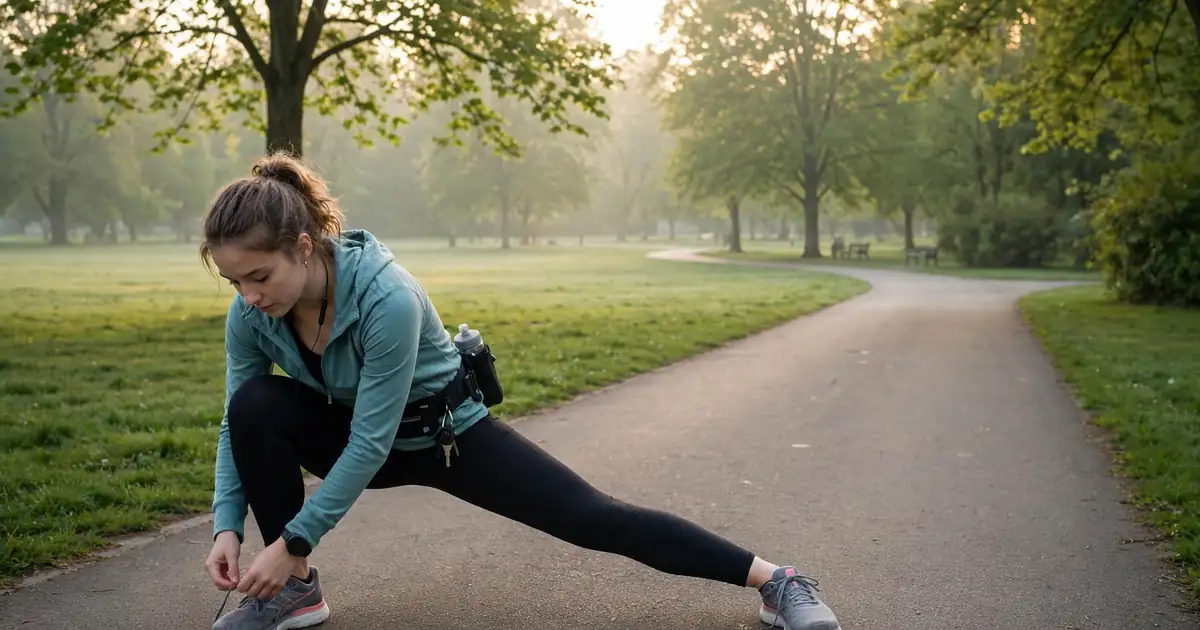
Injury prevention starts before every run. Begin with a five-minute brisk walk to warm up your muscles, then start running slowly for the first few minutes. After your run, walk for five minutes to cool down, then stretch gently while your muscles are warm. Hold each stretch for twenty to thirty seconds and breathe normally. Running beginners who warm up and cool down properly have far fewer injuries than those who skip these steps. Rest days are part of training, so protect at least two each week.
Learn to tell normal soreness from warning pain. Mild muscle ache a day after a hard run is normal and fades quickly. Sharp pain, swelling, or pain that changes how you walk is a signal to stop and rest. Common new-runner problems include shin splints, sore knees, and aching Achilles tendons, and most settle with a few days of rest, ice, and easier running. If pain lasts more than a week, or keeps coming back, see a doctor or physiotherapist. Running beginners who listen to their bodies run for years.
Common Mistakes Running Beginners Should Avoid
The biggest mistake is doing too much too soon. Excitement is natural in week one, but running every day, or doubling your distance in a week, overloads muscles and joints that have not adapted yet. Running beginners should run three days a week at most in the first month, with rest days in between. Another common mistake is skipping the warm-up and cooling down, which leaves cold muscles stiff and raises injury risk. A third mistake is wearing the wrong shoes, often old trainers with flat soles. Treat rest days as training days, because your body grows stronger while you rest.
Comparing yourself with others is a quieter mistake, but it ruins many new runners. Social media is full of fast runners posting personal bests, and it is easy to feel slow by comparison. Ignore them. Your pace, your distance, and your progress are the only numbers that matter. New runners who run their own race enjoy it more and stick with it longer. Another mistake is running through pain. Pain is information, not weakness, and running on an injury turns a one-week rest into a two-month layoff.
Poor hydration and fuelling also hold new runners back. Drink water through the day, not just during your run, and take a small bottle on warm days. Eat a light snack, such as a banana or toast, one to two hours before running, and avoid heavy meals just before a run. Running beginners also forget sun protection on bright days, so wear sunscreen and a cap when the sun is strong. Small habits like these add up. Get the basics right, and the running takes care of itself.
Running Beginners: Frequently Asked Questions
How often should running beginners run each week?
Three days a week is ideal for running beginners in the first two months. Run on alternate days, such as Monday, Wednesday, and Saturday, so your muscles have a full rest day between sessions. You can walk, stretch, or do light strength work on rest days. Once you can run for thirty minutes comfortably, you may add a fourth easy run. Running every day too soon is the fastest route to injury, so build your weekly routine slowly and keep at least two rest days each week. Keep a simple log so you can watch your own progress grow.
How start running if I have never run before?
Start with walking. Walk briskly for twenty minutes, three times a week, for one week. Then begin the run-walk plan: run for one minute, walk for two minutes, and repeat eight times. If you feel breathless, slow down or walk longer. The question of how start running has one simple answer: start slower than you think you should. Your body adapts quickly, and within a month you will run further than you believed possible. The NHS Couch to 5K programme follows this same gentle method and has helped millions of people start running.
How long does it take running beginners to run 5K?
Most running beginners reach 5K in eight to ten weeks with three runs a week. The Couch to 5K plan takes nine weeks, and many people finish it running for thirty minutes without stopping. Your time does not matter in the beginning. Some people take twelve weeks, and that is fine too. What matters is steady progress, not speed. If you repeat a week or take a rest week, you are still moving forward. The runners who finish are the ones who keep showing up, three times a week, even when progress feels slow.
What should running beginners eat before a run?
Eat a small, easy-to-digest snack one to two hours before running. Good choices include a banana, a slice of toast with honey, or a small bowl of porridge. Avoid heavy, fatty, or high-fibre meals just before a run, because they can cause stomach discomfort. Drink a glass of water before you head out, and take water with you on warm days. After your run, eat a meal with protein and carbohydrates within two hours to help your muscles recover. Running beginners who fuel well feel stronger on every run and recover faster between sessions.
Is running bad for your knees?
No, running is not bad for healthy knees. Research on long-term runners shows their knees are often healthier than those of people who never run, because running strengthens the muscles that support the knee joint. Knee pain in running beginners usually comes from doing too much too soon, weak leg muscles, or worn-out shoes, not from running itself. Build up slowly, strengthen your legs with squats and lunges, and replace old shoes. If knee pain lasts more than a week, or the knee swells, stop running and see a doctor.
What is the best time of day for running beginners to run?
The best time is the time you will stick with. Morning runs suit people who like a fresh start and cooler air, and they leave evenings free. Evening runs suit people who feel stiff in the morning and prefer warmer muscles later in the day. Running beginners should pick one regular slot and protect it, because routine beats motivation. Try both times for a week each and keep the one that feels easier. Avoid running in the hottest part of the day, and choose well-lit routes if you run after dark.
Final Thoughts: Start Slow and Keep Going
Running rewards patience more than talent. The runners who last are not the fastest starters. They are the ones who ran slowly, rested well, and showed up three times a week for months. Your first month will have hard days, and that is normal. Some runs will feel heavy, and some weeks will feel flat. Keep going anyway, because fitness builds quietly in the background. Running beginners who trust the process wake up one morning and realise the run that once felt impossible now feels easy. That moment is worth every slow step before it.
Start tomorrow, not next Monday. Put your shoes by the door tonight, set your alarm, and walk out for your first run-walk session. Tell a friend your plan, or join a local running group. Track your runs, celebrate small wins, and be kind to yourself on slow days. Running beginners become runners the day they stop asking whether they can run and start asking how far they will run today. Your first step is the only step that matters right now. Take it, and keep taking it, one run at a time.
Disclaimer: This article is for educational and informational purposes only and is not medical advice. Always consult a qualified healthcare professional for any health concern.

Author Profile by Health Physical Fitness
I write evidence-based educational articles on health, fitness, wellness, nutrition, diet, weight management, healthy foods, lifestyle and skincare. All articles are for educational and informational purposes only, not medical advice.