
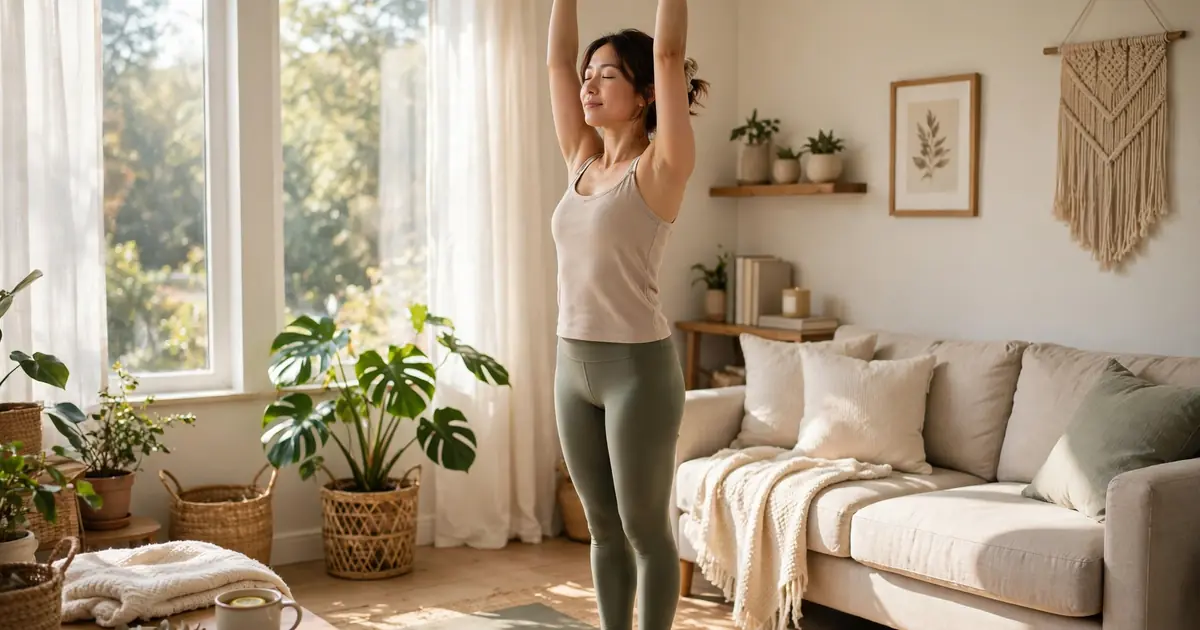
Yoga poses for beginners offer a calm and friendly way to start moving, breathing, and feeling stronger without pressure to be flexible. If you have never tried yoga, this guide gives you seven gentle poses, clear steps, and simple breathing cues that protect your body while you learn. You need no special equipment, only a mat or a soft floor and ten minutes. Each pose below takes about a minute, and together they build balance, ease stiffness, and calm a busy mind. Yoga poses for beginners work best when practised slowly, with steady breathing and patience.
Why Yoga Poses for Beginners Work So Well
Yoga poses for beginners work because they join gentle movement with slow breathing, and that combination helps the whole body at once. Holding a pose for five slow breaths wakes up muscles that desk work leaves asleep, while deep breathing tells the nervous system it is safe to relax. Research supports regular movement, including flexibility work, as part of a healthy weekly routine. For yoga poses for beginners, even a short daily session can ease a stiff neck, loosen tight hips, and make everyday movement feel easier.
Yoga poses for beginners also calm the mind in a way that few other exercises can match. Slow breathing during a pose lowers tension in the shoulders, jaw, and lower back, which is where stress likes to hide. Yoga poses for beginners often notice better sleep after an evening routine, because the body shifts into rest mode more easily. That calm feeling is not imaginary: gentle movement and deep breathing reduce the stress hormones that keep muscles tight. A few quiet minutes on the mat can change the whole evening.
7 Best Powerful Yoga Poses for Beginners
These seven yoga poses for beginners form a complete routine for the whole body. Together they cover balance, strength, flexibility, and calm breathing, which are the four things a beginner needs most. Yoga poses for beginners should learn each pose slowly, breathe normally through every hold, and never force a position. Hold each pose for five slow breaths, repeat it twice if you like, and rest for a few breaths between poses. Yoga poses for beginners can finish the whole routine in about ten minutes, and no pose needs any equipment.
1. Mountain Pose (Tadasana)
Mountain pose looks simple, but it teaches the standing posture that every other pose builds on. Stand tall with feet together or hip-width apart, arms relaxed at your sides, and weight spread evenly across both feet. Lift through the crown of your head, relax your shoulders down, and breathe slowly for five breaths. This pose wakes up the legs, steadies your balance, and reminds you how good tall posture feels. Feel strength travel from your feet through your legs into your spine.
For yoga poses for beginners, mountain pose is the best place to check your alignment. If your shoulders creep toward your ears, drop them. If your weight rolls to the outer feet, press the big toes down. Practise it while waiting for the kettle or standing in a queue, and it becomes a habit that follows you off the mat. Two or three rounds a day are enough to start.
2. Downward-Facing Dog (Adho Mukha Svanasana)
Downward-facing dog is the most famous yoga pose, and it stretches the whole back of the body at once. Start on hands and knees, tuck your toes, and lift your hips up and back into an upside-down V shape. Keep your knees soft, press your hands firmly into the mat, and let your head hang heavy between your arms. Hold for five slow breaths and feel the stretch run from your heels to your shoulders. Keep your neck long and your shoulders away from your ears.
Beginners often find this pose hard on the wrists, so spread your fingers wide and press through the whole palm. Bending the knees a little is fine and keeps the spine long, which matters more than straight legs. Yoga poses for beginners should treat this pose as a gentle stretch, never a race to touch the heels down. Two rounds, with a rest in child’s pose between them, work well.
3. Child’s Pose (Balasana)
Child’s pose is a resting pose, and it is the one you return to whenever you need a break. Kneel on the mat, sit back toward your heels, and fold forward with arms stretched out in front of you. Rest your forehead on the mat, close your eyes, and breathe slowly into your back. This pose stretches the hips and lower back gently and gives the mind a quiet moment.
Yoga poses for beginners can use child’s pose between harder poses or at the end of a session to let the body settle. If your forehead does not reach the mat, rest it on folded hands or a cushion instead. Keep your breathing slow and let each breath out soften the shoulders a little more. Even one minute here can calm a busy day, and it is safe for almost everyone.
4. Warrior I (Virabhadrasana I)
Warrior one builds leg strength and opens the hips and chest in one strong shape. Step your right foot forward into a deep lunge and turn your left foot out slightly, keeping both heels on the floor. Bend the front knee over the ankle, lift both arms overhead, and look up gently. Hold for five breaths, feeling the stretch through the front of the back hip, then switch sides. Press the back heel firmly into the floor to steady the pose.
Keep the front knee tracking over the second toe, and never let it collapse inward. If balance wobbles, shorten the stance a little and keep your gaze forward instead of up. Yoga poses for beginners should build this pose slowly, because the strength comes from the legs, not from forcing the bend. Two rounds per side will wake up the whole lower body.
5. Tree Pose (Vrksasana)
Tree pose trains balance, and it does it with a calm focus that quiets the mind. Stand tall, shift your weight onto your left foot, and place the sole of your right foot against your left ankle, calf, or thigh, never against the knee. Bring your hands together at your chest, fix your eyes on one still point, and breathe slowly for five breaths before switching sides. If standing on one leg feels hard, keep the toes of the raised foot touching the floor.
For yoga poses for beginners, wobbling is normal, so keep a wall or chair nearby for your first few tries. If the raised foot slips, lower it to the ankle and try again without any frustration. The pose works because it asks the small muscles of the foot and ankle to wake up and hold you steady. A few seconds of stillness each day builds balance faster than any long session.
6. Cat-Cow Pose (Marjaryasana-Bitilasana)
Cat-cow is a gentle flowing movement that warms the spine and wakes up the back. Start on hands and knees with wrists under shoulders and knees under hips. Breathe in as you drop your belly and lift your head and tailbone, then breathe out as you round your spine and tuck your chin. Move slowly with the breath for five full rounds, letting each movement follow the breath.
This pair of poses is kind to stiff backs because nothing is held or forced. Yoga poses for beginners can use cat-cow as a warm-up before the other poses, or as a gentle stretch on its own in the morning. Keep the movement small if your back is sore, and stop if anything hurts. Five slow rounds are enough to loosen the whole spine.
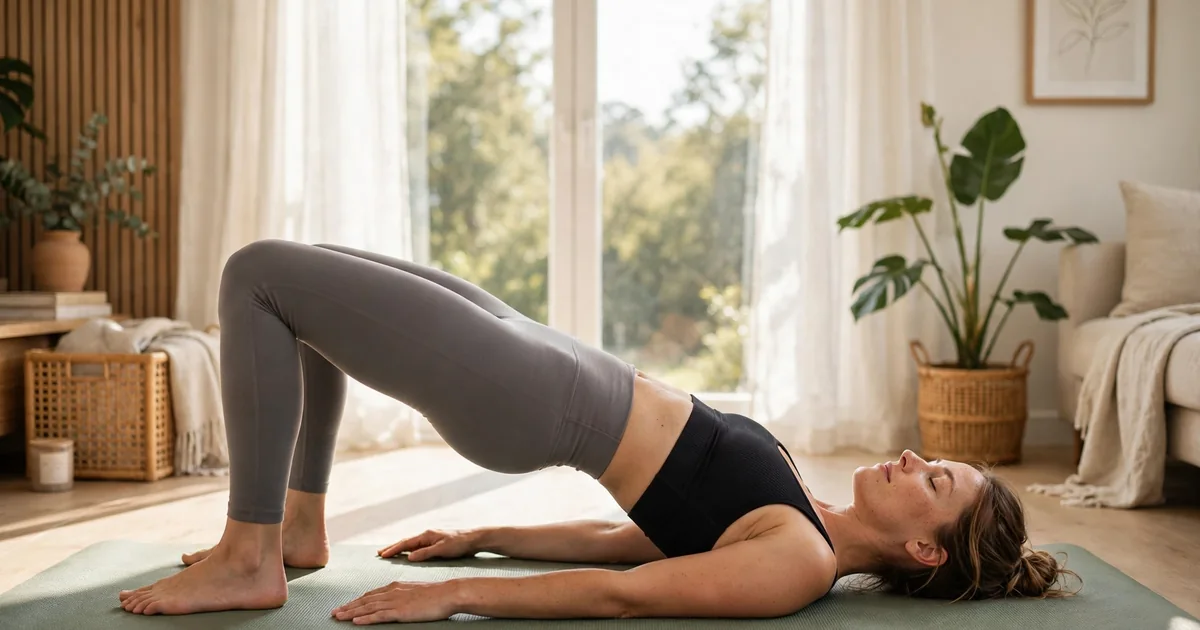
7. Bridge Pose (Setu Bandha Sarvangasana)
Bridge pose strengthens the back, glutes, and legs while opening the chest, and it is a calm way to finish the routine. Lie on your back with knees bent and feet flat near your hips, arms resting at your sides. Press through your feet and lift your hips toward the ceiling until your body forms a straight line from shoulders to knees. Hold for five slow breaths, breathing into the chest. Keep your chin slightly tucked and your neck long throughout the hold.
Keep your knees pointing forward and avoid letting them fall outward. If your lower back complains, lift only halfway and rest a folded blanket under your shoulders. Yoga poses for beginners should lower down slowly, one vertebra at a time, and rest flat for a few breaths before repeating. Two rounds leave the back feeling strong and the chest open.
How to Build a Simple Daily Yoga Routine
A simple routine beats a perfect one, so start with ten minutes a day and the same seven poses. Practise in the morning to wake the body up, or in the evening to unwind before bed. Yoga poses for beginners grow steadier when the routine repeats, because muscles and balance learn through repetition. Keep your mat in sight, wear comfortable clothes, and treat the ten minutes as time for yourself, not another task. If you want more beginner guidance, the NHS guide to yoga explains the basics clearly.
- Monday: all seven poses, one round each, after your morning walk.
- Tuesday: mountain pose, child’s pose, and cat-cow, before bed.
- Wednesday: all seven poses, one round each, after light exercise.
- Thursday: rest day, or one gentle round of child’s pose and bridge only.
- Friday: all seven poses, one round each, after your morning walk.
- Weekend check: add one breath to each hold if the week felt easy.
For yoga poses for beginners, the routine works because short daily practice teaches the body faster than one long weekly session. Ten minutes a day adds up to more than an hour a week, and the body remembers what it repeats. Track your progress simply: note which pose felt hardest each week and watch it get easier. When all seven feel comfortable, hold each one for two extra breaths before looking for harder poses. Slow progress that lasts beats fast progress that fades.
Mistakes That Slow Your Progress
The most common mistake is holding your breath while you hold a pose. New students often freeze, tense the shoulders, and forget to breathe, which leaves the muscles guarded and the stretch shallow. Keep the breath slow and steady through every hold, and let each exhale soften the body a little more. Another mistake is copying advanced shapes seen in photos or videos. Yoga poses for beginners should remember that the body has its own range today, and working inside it keeps you safe while flexibility grows.
Skipping the warm-up is another mistake that slows progress. Cold muscles resist stretching, so start with two minutes of easy movement, like marching in place or gentle arm circles, before the first pose. Yoga poses for beginners should also avoid practising on a full stomach, because twists and forward folds feel uncomfortable after a big meal. Wait an hour after eating, practise gently, and rest whenever your body asks. Patience is the fastest teacher.
Yoga Poses for Beginners: Frequently Asked Questions
How often should yoga poses for beginners be practised?
Five short sessions a week is a good target, with each session lasting about ten minutes. Daily practice is fine too, as long as every pose stays gentle and pain-free. If you are very stiff, start with three sessions a week and add more when the routine feels easy. Rest days matter as well, because the body adapts during recovery. Yoga poses for beginners should listen to the body and take a day off if they feel sore.
Do I need to be flexible to start yoga?
No, flexibility is the result of yoga, not the entry ticket. Yoga poses for beginners are chosen because they work for stiff bodies, and props like blocks, straps, and cushions make every pose easier. Tight hamstrings, stiff shoulders, and a sore back are normal starting points. With regular practice, the range grows a little each week. Start where you are and let the poses do the work.
What equipment do yoga poses for beginners need?
A yoga mat is the only thing you really need, and a soft carpet or rug works as a substitute. A cushion helps in child’s pose, a folded blanket supports the knees in bridge pose, and a strap or belt can help you reach your feet in forward folds. Comfortable clothes that stretch with you matter more than special gear. Yoga poses for beginners should keep water nearby and practise barefoot for better grip.
Can yoga help with back pain?
Gentle yoga can ease many kinds of back stiffness, but pain needs respect. Yoga poses for beginners with back pain should choose mild poses, keep the range small, and stop at once if pain sharpens or shoots down a leg. Child’s pose, cat-cow, and bridge pose are gentle choices when done slowly. Anyone with ongoing back pain, a recent injury, or a diagnosed spine condition should check with a doctor or physiotherapist first.
Is yoga good for weight loss?
On its own, yoga is a gentle activity, so the calories it burns are modest. Its real gift for weight is different: it builds the habit of moving daily, eases the stiffness that makes walking unpleasant, and calms the stress that drives snacking. Pair a short yoga routine with regular walking and balanced meals, and the combination works far better than any single habit. For a walking plan that fits beside yoga, see our walking for weight loss guide.
What should I do if a pose hurts?
Ease out of the pose right away and sit or lie down until the feeling passes. Sharp pain, tingling, or numbness means the body has had enough of that shape today. Try the pose again another day with a smaller range and a shorter hold, or leave it out and enjoy the other six. Pain is information, not a challenge to beat. If the same pose keeps hurting, ask a doctor or physiotherapist before trying it again. A folded blanket under the knees can make sitting poses more comfortable.
Final Thoughts on Your Yoga Journey
Yoga poses for beginners who start small and stay steady often surprise themselves. Seven poses, ten minutes a day, and a little patience are enough to loosen a stiff body and calm a busy mind. Focus on slow breathing, gentle holds, and a routine you enjoy, and let the results build week by week. Yoga is a small habit with a large return, and ten quiet minutes a day is a gift your body will thank you for. Physical fitness grows from small daily habits like this one.
Start tonight or tomorrow morning, whichever feels easier, and keep the first session short. One round of the seven poses is a complete practice, and finishing it is the whole victory. After four weeks, notice which poses feel easier and which still challenge you, then build from there. Yoga rewards the people who return to the mat, not the people who rush. Roll out your mat and begin. Celebrate the small wins, like standing taller or breathing more slowly.
Disclaimer: This article is for educational and informational purposes only and is not medical advice. Always consult a qualified healthcare professional for any health concern.

1 Comment