
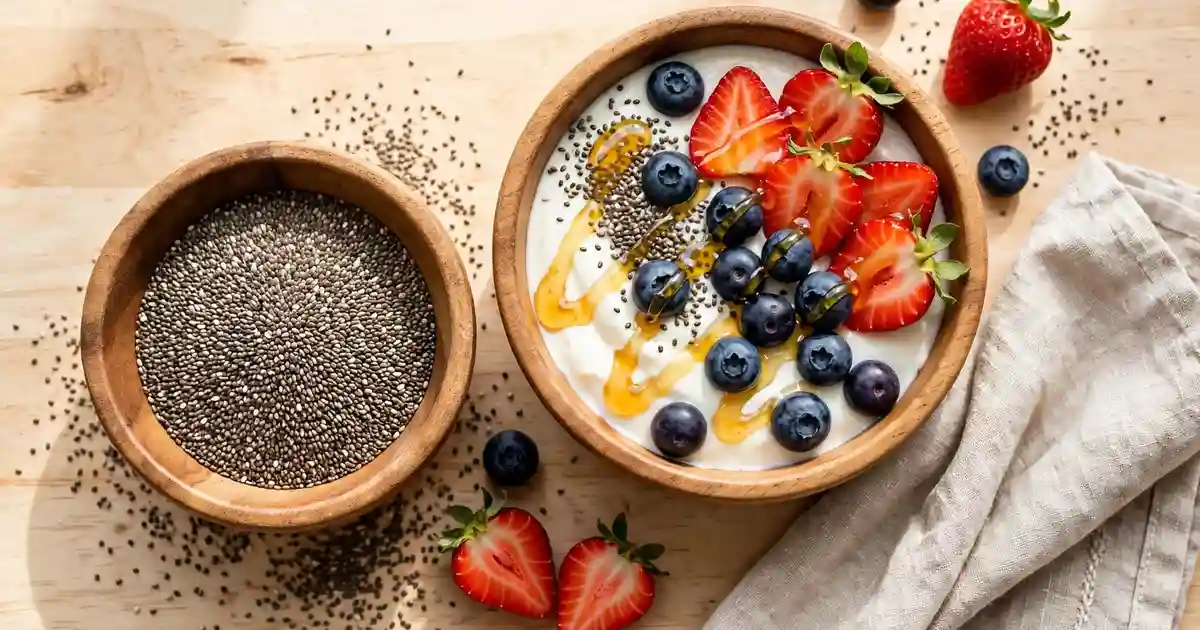
Chia seeds benefits begin with a very small seed that carries a surprising amount of nutrition. These tiny black and white seeds come from the plant Salvia hispanica, a staple food in Mexico and Guatemala long before it reached breakfast bowls around the world. Today, chia seeds appear in puddings, smoothies, breads, and salads, and research explains why they deserve a place in a healthy diet. This guide covers eight powerful facts about chia seeds benefits, what the science says, and how to add them to your meals in simple ways.
Chia seeds are the edible seeds of Salvia hispanica, a flowering plant in the mint family. People have eaten them for thousands of years, and Aztec communities valued them as food. A single serving of two tablespoons holds around 140 calories, four grams of protein, eleven grams of fibre, and seven grams of unsaturated fat. The same serving gives 18 percent of the daily calcium target. Chia seeds have almost no taste, so they blend into sweet and savoury dishes without changing the flavour. Chia seeds benefits form a soft gel when mixed with liquid, which is why they work so well in puddings and smoothies.
Chia Seeds Benefits: 8 Best Powerful Health Facts
Chia seeds benefits come from their mix of fibre, healthy fats, protein, minerals, and antioxidants. No single food can protect your health on its own, and chia seeds work best in a varied diet with plenty of vegetables, whole grains, and lean protein. The eight facts below explain what research suggests, and each one comes with a practical way to enjoy them. Read them in order, or jump to the fact that matters most to you.
What Is Inside Chia Seeds? A Look at the Nutrition
Two tablespoons of chia seeds give you a compact set of nutrients for very few calories. The seeds hold about 140 calories, four grams of protein, eleven grams of fibre, seven grams of unsaturated fat, and useful amounts of calcium, phosphorus, magnesium, and zinc. They are one of the richest plant sources of omega-3 fatty acids, in the form of alpha-linolenic acid (ALA). Chia seeds are also a complete protein, which means they contain all nine essential amino acids that the body cannot make on its own. Few foods match chia seeds benefits in such a small serving.
Chia seeds benefits deserve special attention for their fibre. Most of it is insoluble fibre, with mucilage that turns into a gel when wet. This gel slows digestion, which helps you feel full longer and keeps blood sugar steadier after meals. The same fibre supports healthy digestion and feeds the helpful bacteria in the gut. Because the seeds absorb up to ten times their weight in water, they also add fluid that helps prevent constipation when you drink enough water.
1. Rich in Plant Omega-3 Fatty Acids
Chia seeds are one of the richest plant sources of omega-3 fatty acids. About 60 percent of the oil in chia seeds is alpha-linolenic acid, or ALA, a type of omega-3 that the body uses for heart and brain health. Omega-3 fats help lower triglycerides, support healthy blood pressure, and reduce inflammation. Chia seeds benefits give vegetarians and vegans an easy way to add omega-3 fats to their diet without fish. A daily spoonful of chia seeds can raise your ALA intake in a simple, affordable way.
The body converts some ALA into the longer omega-3 fats EPA and DHA, but the conversion rate is low. That is why chia seeds work best alongside other omega-3 sources, such as oily fish, walnuts, and flaxseed. Even so, research links chia seeds benefits with a lower risk of heart problems. The Nurses’ Health Study found a lower risk of sudden cardiac death in women with the highest ALA intake. Chia seeds are a practical step toward that goal, not a magic cure on their own.
2. High in Fibre for Better Digestion
A two-tablespoon serving of chia seeds holds about eleven grams of fibre, which is close to half the daily fibre target for many adults. Fibre adds bulk to the stool, keeps bowel movements regular, and supports helpful gut bacteria. The soluble fibre in chia seeds forms a gel that slows the movement of food through the gut, which helps you feel full and steady after eating. Chia seeds benefits help people who add chia seeds to breakfast stay satisfied until lunch without reaching for snacks.
Fibre also helps the body in quieter ways. It feeds the microbes in the large intestine, and those microbes produce compounds that support the gut lining and the immune system. Chia seeds benefits work best when you drink enough water with them, because fibre needs fluid to do its job. Start with one tablespoon a day if you are new to high-fibre foods, and increase slowly over a week. This gentle start helps your digestion adjust without bloating or discomfort.
3. A Complete Protein With All Essential Amino Acids
Chia seeds are a complete protein, which means they contain all nine essential amino acids that the body cannot make by itself. Most plant foods lack one or more of these amino acids, so chia seeds benefits are rare and valuable. Two tablespoons give about four grams of protein, which supports muscle repair, skin health, and steady energy. For people who eat little or no meat, chia seeds benefits add useful protein to meals that might otherwise fall short.
Protein also helps with fullness, because it digests more slowly than carbohydrates. A breakfast with chia seeds, yoghurt, and fruit keeps you satisfied longer than bread and jam alone. You can stir chia seeds into porridge, blend them into a smoothie, or mix them into yoghurt for an easy protein boost. The seeds need no cooking, so they fit busy mornings well. With lentils, beans, or eggs, they help build a balanced plate. If you want to compare protein sources, read our plant protein versus animal protein guide.
4. Supports Heart Health
The mix of omega-3 fats, fibre, and minerals in chia seeds supports heart health in several ways. The soluble fibre may help lower LDL cholesterol, the type that clogs arteries, by carrying some cholesterol out of the body. Omega-3 fats help regulate heart rhythm and blood pressure, while the magnesium and potassium in chia seeds support healthy blood vessels. Research suggests chia seeds benefits link with a lower risk of heart disease, although chia seeds alone cannot prevent it.
Human trials on chia seeds and heart risk factors have shown mixed results. Some studies found small improvements in blood pressure or cholesterol, while others found no change. The strongest evidence supports chia seeds benefits as part of a whole diet rich in fibre and omega-3 foods. Adding chia seeds to a diet already full of vegetables, whole grains, and healthy oils is a sensible step. It works with the rest of your diet, not instead of it.
5. Helps Keep Blood Sugar Steady
Chia seeds benefits may help keep blood sugar steadier after meals. Their fibre slows digestion, so glucose enters the blood more slowly instead of spiking quickly. The gel that forms around soaked chia seeds also slows the breakdown of starchy foods eaten with them. This steadier pattern matters for people with type 2 diabetes and for anyone who feels tired or hungry after eating. Adding chia seeds to breakfast may reduce the mid-morning energy crash that follows sugary cereals.
Some small studies found that chia seeds improved blood sugar control in people with type 2 diabetes, but more research is needed. Chia seeds are not a treatment for diabetes and cannot replace medicine or medical advice. Chia seeds benefits work best in a balanced diet with whole grains, vegetables, and lean protein. If you take diabetes medicine, speak to your doctor before making big changes to your diet. Small, steady habits matter more than any single food.
6. Good for Bone Health
Chia seeds give a useful amount of the minerals that bones need. Two tablespoons provide about 18 percent of the daily calcium target, along with magnesium and phosphorus, which work with calcium to keep bones strong. Calcium builds bone, magnesium helps the body use calcium, and phosphorus forms part of bone structure. For people who eat little dairy, they add calcium from a plant source. Chia seeds benefits are a simple way to raise mineral intake without a supplement.
Bone health depends on more than one food, of course. Weight-bearing exercise, enough vitamin D, and plenty of vegetables all protect bones over time. Chia seeds benefits fit into that pattern as a mineral-rich extra, not as a replacement for milk, yoghurt, or leafy greens. Sprinkle them on salads, stir them into soups, or add them to smoothies to lift the mineral content of meals. Small additions like this add up over weeks.
7. Rich in Antioxidants That Protect Cells
Chia seeds contain antioxidants such as chlorogenic acid, caffeic acid, and quercetin. Antioxidants protect cells from damage caused by free radicals, the unstable molecules that form during normal metabolism and from pollution, smoke, and sunlight. Over time, this damage can raise the risk of ageing and chronic disease. Chia seeds benefits help neutralise free radicals before they harm cells. A diet rich in colourful plant foods is the best way to keep antioxidant intake high.
The antioxidants in chia seeds also protect the seeds themselves. Chia seeds stay fresh for four to five years without refrigeration, partly because their own antioxidants slow the fats from going rancid. This long shelf life makes them a practical pantry food to buy in bulk and use a little at a time. Store them in a cool, dry spot in a sealed jar. They need no special care, which is one more reason they fit busy kitchens so well.
8. Supports Weight Management by Keeping You Full
Chia seeds benefits may help with weight management because they keep you full for longer. Chia seeds benefits slow digestion, and the gel they form in the stomach takes up space, which sends fullness signals to the brain. A breakfast with chia pudding or a smoothie with chia seeds often keeps hunger away until lunch, which makes it easier to avoid extra snacks. The seeds add only about 140 calories per serving, so they fill you up without adding many calories.
Research on chia seeds and weight loss is mixed. One study found that chia seeds did not cause weight loss in overweight adults, while other studies found better fullness and less hunger. Chia seeds are a tool that supports healthy eating, not a weight-loss product on their own. They work when the rest of the diet is balanced and portions are sensible. Use chia seeds benefits to make meals more filling, and let the pattern do the work.
How to Add Chia Seeds to Your Daily Diet
Adding chia seeds to your diet is easy because they have almost no flavour and need no cooking. Start with one tablespoon a day and build up to two tablespoons, the serving used in most studies. Soak the seeds in liquid for 15 to 20 minutes before eating them, or stir them into moist foods such as porridge, yoghurt, or smoothies. Never eat dry chia seeds by themselves, because they can swell in the throat and cause a blockage. Always eat them soaked or mixed into food.
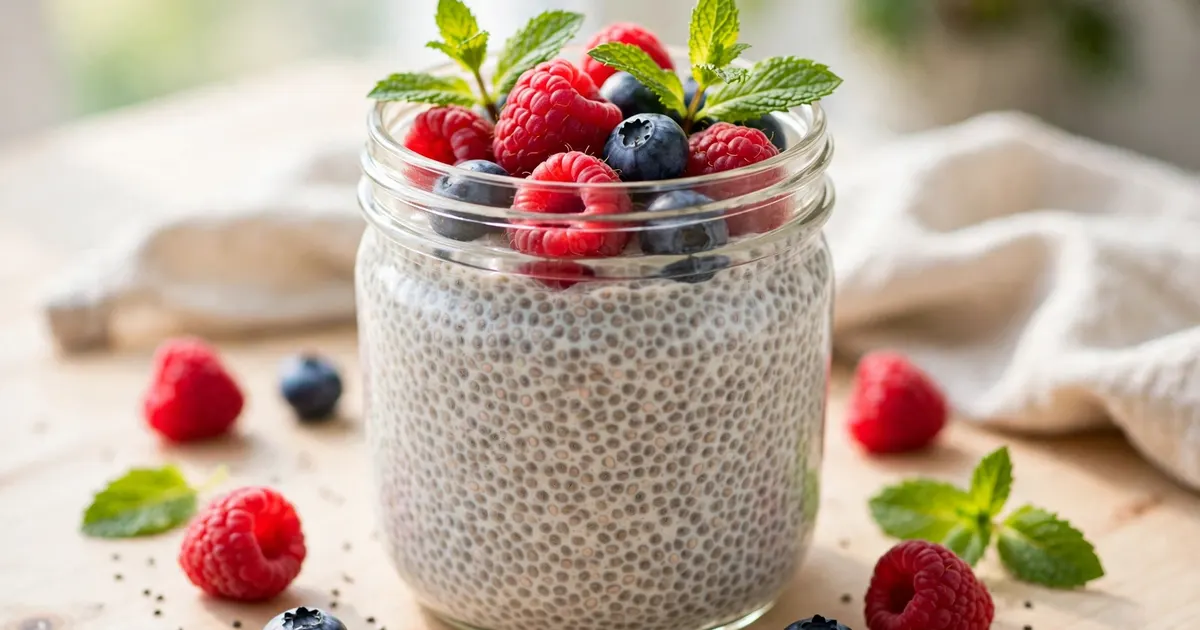
Chia pudding is the simplest recipe to learn. Mix a quarter cup of chia seeds with one cup of milk, almond milk, or fruit juice, stir well, and leave it in the fridge for 15 minutes until it thickens. Top it with fruit, nuts, or honey. You can also stir chia gel into soups and sauces as a thickener, sprinkle the seeds on salads, or use them as an egg replacer in baking. One egg equals one tablespoon of chia seeds mixed with three tablespoons of water, left for five minutes until thick. For more everyday meal ideas, see our healthy foods guide.
- Stir a tablespoon into your morning porridge or overnight oats.
- Blend chia seeds into a fruit smoothie for extra fibre and protein.
- Make chia pudding with milk and top it with berries and nuts.
- Sprinkle chia seeds over salads, soups, and roasted vegetables.
- Mix chia gel into sauces, dressings, and homemade jam as a thickener.
- Add chia seeds to muffin, bread, and pancake batter before baking.
- Stir a spoonful into yoghurt with honey and sliced banana.
- Use chia seeds as an egg replacer in vegan baking recipes.
Frequently Asked Questions About Chia Seeds Benefits
What are the main chia seeds benefits?
The main chia seeds benefits come from their fibre, omega-3 fats, protein, calcium, and antioxidants. They support digestion, heart health, steady blood sugar, and bone health. Two tablespoons give eleven grams of fibre, four grams of protein, and 18 percent of the daily calcium target. Chia seeds benefits work best as part of a varied diet, not as a single cure for any health problem.
How much chia seeds should I eat per day?
Most studies of chia seeds benefits use two tablespoons, about 28 grams, per day. Start with one tablespoon and build up over a week, and drink enough water with them. Eating more is not harmful for most people, but it adds calories and fibre quickly. If you have a digestive condition, ask your doctor what amount suits you.
Should I soak chia seeds before eating them?
Yes, soak them first or eat them in moist food. Chia seeds absorb up to ten times their weight in water and swell quickly. Eating dry seeds followed by water can cause them to expand in the throat, which is dangerous. Soak them for 15 to 20 minutes in water, milk, or juice, or stir them into porridge or yoghurt.
Can chia seeds help with weight loss?
Chia seeds benefits may help you feel full for longer, which can make it easier to eat less. Their fibre and protein slow digestion and keep hunger away. Research is mixed, and no study shows that chia seeds alone cause weight loss. They support a balanced diet and sensible portions, but they are not a weight-loss product.
Are chia seeds safe for everyone?
Chia seeds are safe for most people when eaten soaked or in moist food. People with swallowing problems should take care, because the seeds swell fast. Those allergic to sesame or mustard seeds should be careful, since cross-reactivity is possible. People on blood-thinning medicine should speak to their doctor first, because omega-3 fats can affect clotting. If in doubt, ask your doctor.
Final Thoughts on Chia Seeds Benefits
Chia seeds are small, affordable, and easy to use, and the research suggests they can support digestion, heart health, steady blood sugar, and strong bones. They are not a magic food, and no seed can replace a balanced diet, regular movement, and good sleep. Add one or two tablespoons a day to foods you already enjoy, drink enough water, and let the habit build slowly. Over weeks, small choices like this add up to real change. Start with a spoonful in tomorrow’s breakfast and see how it feels.
Disclaimer: This article is for educational and informational purposes only and is not medical advice. Always consult a qualified healthcare professional for any health concern.

1 Comment