

Teenage wellness means looking after your body, mind and feelings during the teenage years, from thirteen to nineteen. These years bring fast growth, new friendships, school pressure and many changes, and a few simple daily habits can make them healthier and happier. This guide shares ten practical tips that any teenager can follow, with support from parents, to build strong health, a calm mind and a balanced life. You do not need special products or strict rules, because the best habits are free, simple and easy to repeat every day at home and at school.
The teenage years are a time of big change. Your body grows quickly, your feelings can change from day to day, and school, friends and family all ask more of you. Teenage wellness grows from good food, enough sleep, daily movement and honest talks with people you trust, and these habits help you handle change with confidence. Small steps taken every day add up, and teenage wellness does not need you to be perfect to feel better. Start with one or two tips from this guide, practise them for a few weeks, and notice how your energy, mood and focus improve.
Why Teenage Wellness Matters
The teenage years shape the habits you carry into adult life. The food you eat, the sleep you get and the way you handle stress now build the base for your future health. Teenage wellness matters because teenagers who eat well, move daily and sleep enough often find school easier, feel calmer and get sick less often. Looking after yourself now is not a chore. It is a gift to your future self, and teenage wellness starts with small choices you make every day. And the sooner you start, the easier they feel, so begin today with one small change.
Teenage wellness also protects your mind. School tests, friendships and social media can all add pressure, and learning to manage that pressure early makes a real difference. When you talk about your feelings, take breaks and rest well, you build skills that help for life. Parents and teachers can support you, but the daily choices are yours. This article gives you clear, simple steps that fit real teenage life, not strict rules that are hard to follow. A short walk, a chat with a friend or a good night of sleep can turn a hard day around.
1. Eat a Balanced Diet for Growing Bodies
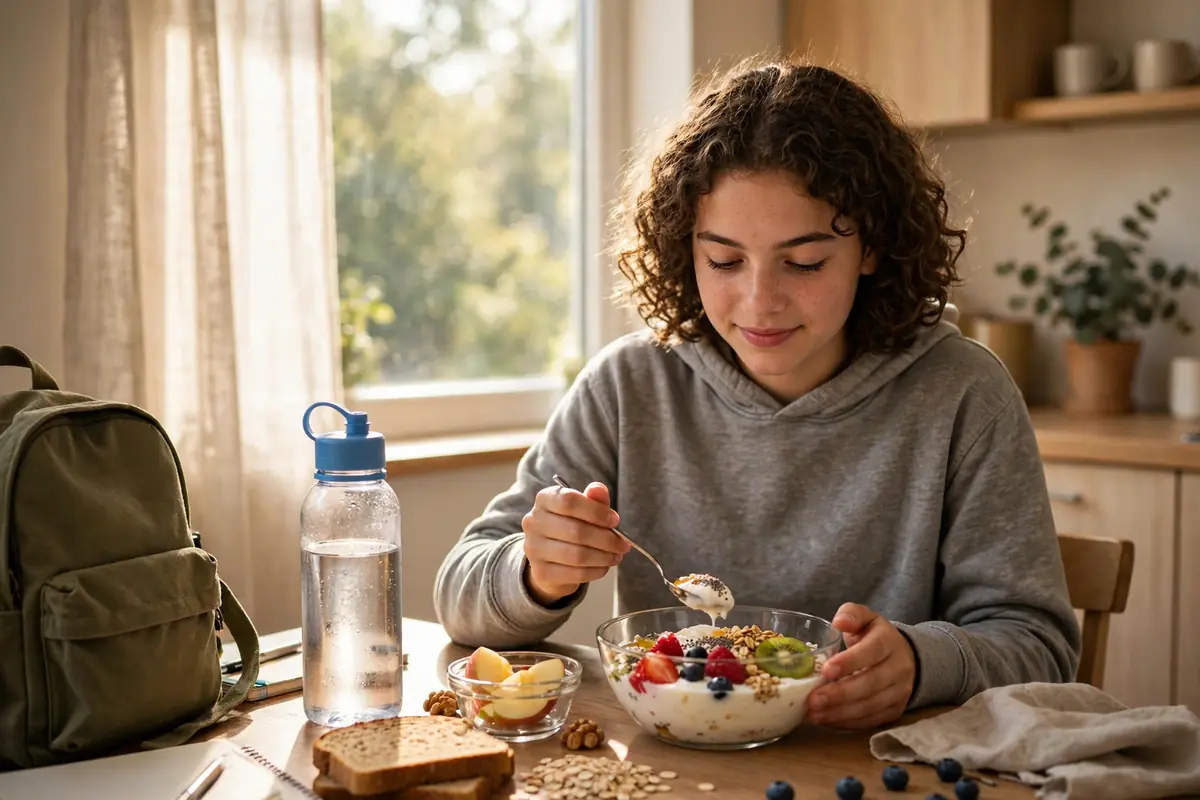
Your body grows faster in your teenage years than at almost any other time, so it needs good fuel. A balanced diet with grains, protein, fruit, vegetables and dairy helps you grow strong bones, build muscle and stay focused at school. Teenage wellness starts with breakfast, so try to eat every morning, even if it is just toast with an egg or a bowl of cereal with milk. A good breakfast wakes up your brain and stops you feeling tired in morning lessons. Iron, calcium and vitamins matter most while you are still growing taller and stronger.
Pack a healthy school lunch when you can, with a sandwich, fruit and water instead of crisps and fizzy drinks. Fizzy drinks and sweets give a quick burst of energy, then leave you feeling flat. If you feel hungry between meals, choose nuts, fruit or yogurt. Teenage wellness does not need a perfect diet. Small swaps, like water instead of soda and fruit instead of biscuits, make a big difference over time. Our guide to healthy foods shows simple choices that work for teenagers.
2. Move Your Body Every Day
Teenagers need about an hour of movement every day, and it does not have to be a gym workout. Walking to school, playing football, dancing, cycling or swimming all count. Movement builds strong muscles and bones, helps you sleep better and lifts your mood. Teenage wellness needs movement, because long hours sitting at school and on screens leave your body stiff and your mind foggy. A short walk or a game with friends can clear both. Your heart, lungs and muscles all grow stronger when you move, and your brain works better too.
Pick an activity you enjoy, because you will stick with it. Join a school team, ride your bike, dance in your room or walk the dog. Even ten minutes of movement is better than none, and it adds up across the week. The NHS explains the benefits of regular exercise for young people, and it is worth a read. Teenage wellness grows when you move with friends, because shared activity is more fun and keeps you going on lazy days. See also our article on mental health and fitness.
3. Sleep 8 to 10 Hours Every Night
Teenagers need eight to ten hours of sleep every night, more than adults. Sleep helps your body grow, your brain store what you learned at school, and your mood stay steady. When you sleep too little, you feel grumpy, find it hard to focus and may even get ill more often. Teenage wellness depends on sleep, so a regular bedtime, even on weekends, helps your body clock settle into a healthy rhythm. Your body releases growth hormones while you sleep, which is why teenagers need more sleep than adults do, so guard your bedtime like homework time.
Screens are the biggest enemy of teen sleep. The light from phones and the pull of messages keep your brain awake long after bedtime. Switch off screens at least an hour before bed, keep your phone charging outside your bedroom if you can, and read or listen to calm music instead. The NHS shares simple steps to get better sleep. Teenage wellness improves with a dark, cool room and a steady routine, so you fall asleep faster and wake up fresh. Read our sleep wellness guide for more ideas.
4. Drink Enough Water
Water keeps every part of your body working well, from your brain to your skin. Teenagers who do not drink enough often get headaches, feel tired and find it hard to concentrate in class. Teenage wellness needs water, so aim for six to eight glasses a day, and more when you play sport or the weather is hot. Carry a water bottle to school so you can sip through the day instead of waiting until you feel thirsty. Your brain is mostly water, so even mild thirst can make it harder to think and learn.
Sugary drinks may taste good, but they add a lot of sugar and can harm your teeth. Water is the best choice, and milk gives you calcium for strong bones. If plain water feels boring, add a slice of lemon or cucumber. Teenage wellness grows from small goals, like finishing one bottle by lunch and another by home time. Soon it becomes a habit, and your energy and skin will thank you for it.
5. Take Breaks from Screens
Phones, games and social media are part of teenage life, but too much screen time can tire your eyes, disturb your sleep and lower your mood. Long hours online often mean less time for friends, sport and rest. Teenage wellness needs screen breaks, so set a simple limit, like one hour of games after homework, and put your phone away during meals and family time. You will notice you feel calmer and more present. Try charging your phone in another room at night, so messages cannot wake you up, and keep a book by your bed instead.
Social media can make you compare yourself with others, which is rarely fair. Remember that people post only their best moments, not their bad days. Follow accounts that make you feel good, and unfollow ones that make you feel small. Teenage wellness improves with one screen-free hour each evening, used to read, draw, talk or walk. Your mind needs rest from screens just as your body needs rest from running.
6. Build Strong Friendships
Good friends make the teenage years happier and easier. Friends listen when you are upset, laugh with you when you are happy, and help you feel that you belong. Teenage wellness grows with friendship, and being a good friend means listening, keeping promises and being kind, even when you disagree. If a friendship makes you feel small or scared, it is not a healthy one, and talking to a trusted adult can help you sort it out. A true friend celebrates your wins and stands by you when things go wrong.
Make time for friends away from screens. Eat lunch together, play a game, join a club or walk home together. Shared activities build trust and memories that last. If you feel shy, start small. Smile, say hello, and ask someone about their day. Teenage wellness starts with kindness, and most teenagers feel nervous about making friends, so a friendly word from you can mean a lot. Kindness costs nothing and often comes back to you.
7. Talk to Your Parents and Trusted Adults
Talking about your feelings is a strength, not a weakness. Parents, teachers and other trusted adults have been teenagers too, and they can help with problems that feel too big to carry alone. Teenage wellness grows when you speak up, so if school, friends or your body worry you, say so. You do not need perfect words. A simple start like I feel stressed about my exams can open a helpful talk. Your parents were teenagers once, and they remember how confusing and exciting these years can feel, so give them a chance to listen.
If talking face to face feels hard, write your feelings in a note or a message. Some teenagers find it easier to talk while walking or driving, when there is less eye contact. Parents want to help, but they cannot read your mind. Regular small talks build trust, so big problems feel easier to share. If you ever feel unsafe or very low, tell an adult straight away, because help is always there for you. Our guide on what mental wellness means explains why talking helps.
8. Manage School Stress in Small Steps
School brings tests, homework and deadlines, and stress is normal. The trick is to break big tasks into small steps. Teenage wellness grows when you start homework early, do the hardest part first, and take a five-minute break every half hour. A simple plan for the week, written on paper or a phone, stops work piling up. When you finish a task, tick it off. That small win builds confidence for the next one. Keep a small notebook for homework dates, so nothing surprises you at the last minute, and check it each evening before you pack your bag.
On test days, breathe slowly, read each question twice, and answer the easy ones first. A bad grade is not the end of the world. It shows what to practise next, and every student has bad days. If stress keeps you awake or makes you feel sick, talk to a teacher or parent. They can help you plan better and, if needed, speak to the school. You are more than your grades, and asking for help is smart.
9. Take Care of Your Skin and Body
Puberty changes your skin, and spots are common for teenagers. Wash your face twice a day with a gentle cleanser and warm water, and pat it dry with a clean towel. Do not squeeze spots, because it can push germs deeper and leave marks. Teenage wellness includes simple skin care, so keep your hands off your face during the day, and change your pillowcase often. Simple care works better than harsh products that dry out your skin. Use lukewarm water, not hot water, because hot water dries skin out.
Shower after sport, wear clean clothes, and use deodorant, because sweat and body odour increase in the teenage years. Brush your teeth twice a day and visit the dentist regularly. If spots are painful, spread fast or make you feel very low, ask a parent to take you to a doctor or pharmacist. There is no shame in skin problems. Most teenagers have them, and good care plus time usually helps a lot.
10. Make Time for Hobbies and Fun
Hobbies give your mind a break from school and screens. Music, drawing, reading, cooking, coding, gardening or playing a sport all count. A hobby you enjoy builds skill and confidence, and it gives you something to look forward to each day. Teenage wellness grows with fun, so even thirty minutes after homework can lift your mood and help you relax. Try a few things until you find one that fits you.
Fun is not a waste of time. It is part of staying healthy. Play a board game with family, fly a kite, learn a new song or help cook a meal. Time outside in fresh air and daylight is good for your body and your mood. When you enjoy life, you cope better with hard days. Make fun a regular part of your week, not something you only do when all work is done. Our healthy habits guide has more simple ideas.
Frequently Asked Questions
What is teenage wellness?
Teenage wellness means caring for your body, mind and feelings during the ages of thirteen to nineteen. It covers healthy food, enough sleep, daily movement, good friendships and honest talks about feelings. It is not about being perfect. It is about small daily habits that help teenagers grow strong, feel calm and enjoy life. It also means asking for help when you need it.
How much sleep do teenagers need?
Teenagers need eight to ten hours of sleep each night. Teenage wellness depends on good sleep, because sleep helps the body grow, the brain learn and the mood stay steady. A regular bedtime, screens off an hour before bed and a dark, cool room all help teenagers fall asleep faster and wake up fresh for school.
How can teenagers eat healthy at school?
A healthy school lunch can be simple: a sandwich with protein, a piece of fruit and a bottle of water. Teenage wellness starts with breakfast too, so eat before school to focus in morning lessons and feel less tired. Avoid fizzy drinks and crisps most days, and keep nuts or fruit for snacks.
How can parents help teenagers stay healthy?
Parents help most by keeping a steady routine, cooking balanced meals and making time to talk. Teenage wellness grows when parents listen without judging, ask about their day, and respect their need for privacy while staying close. Encourage sport, hobbies and sleep, and set fair limits on screens. Small, steady support works better than strict rules.
When should a teenager see a doctor?
A teenager should see a doctor if a problem lasts more than a few weeks, keeps them awake, or stops them enjoying school and friends. Teenage wellness includes getting help early for lasting pain, bad skin problems, big weight changes or feeling very low most days. Parents can book the visit, and doctors are used to helping teenagers.
Disclaimer
This article is for educational and informational purposes only. It is not medical advice, and it does not replace a doctor. If you have a health worry, talk to a parent and see a doctor. Teenage wellness starts with simple habits, and a health professional can guide you when you need more help.

Author Profile by Health Physical Fitness
I write evidence-based educational articles on health, fitness, wellness, nutrition, diet, weight management, healthy foods, lifestyle and skincare. All articles are for educational and informational purposes only, not medical advice.