

Energy drinks heart risk is real for young adults, and new research reported in November 2026 makes the warning hard to ignore. The study found that energy drinks, stimulant supplements linked to higher heart risks in young adults, are a growing concern for people in their late teens and twenties who drink them every day. Young adults reach for a can before study or work, unaware that the caffeine and other stimulants inside can push the heart harder than it should work. This guide explains what the research found, why young adults face the highest risk, and which safer choices can protect your heart.
Energy Drinks Heart Risk: What the New Research Found
Energy drinks heart risk became headline news when Healthline reported on new research in November 2026. The research looked at young adults who regularly used energy drinks and stimulant supplements, and it linked that habit to higher heart risks. The finding matters because energy drinks are now part of daily life for millions of people under thirty. The study did not claim that one can causes heart disease, but it showed a clear pattern: the more stimulants a young person takes in, the harder the heart has to work.
The heart is a muscle that answers to signals from the nervous system, and stimulants turn those signals up. Caffeine blocks the sleepy feeling in the brain, raises alertness, speeds the heart and lifts blood pressure. When energy drinks are combined with stimulant supplements such as pre-workout powders or caffeine pills, the total stimulant load can climb far past what one drink alone would give. That is why doctors now warn young adults to count every source of caffeine, not just the can in their hand.
Energy Drinks, Stimulant Supplements Linked to Higher Heart Risks in Young Adults
The phrase energy drinks, stimulant supplements linked to higher heart risks in young adults sums up the new finding in one line. Researchers found that young adults who used both products faced more heart strain than those who used neither. Their hearts beat faster at rest, their blood pressure ran higher, and some reported palpitations, the feeling that the heart is racing or skipping beats. These are warning signs, and they show up most often in people who drink energy drinks daily or take large doses of stimulant supplements before training.
Energy Drinks Heart Health Young Adults: Why the Habit Starts Early
Young adults reach for energy drinks for simple reasons: long study hours, night shifts, early training, and social nights that run late. A can promises quick energy without sleep, and the bright cans and bold flavours make it feel harmless. Many students say they drink one to stay awake for exams, while young workers use them to get through a double shift. The problem is that the boost is short, and the crash that follows often leads to a second can, then a third, until a daily habit forms.
Energy drinks heart risk grows with that daily habit, because the heart never gets a break from the stimulants. A single can may hold 80 to 200 milligrams of caffeine, and larger cans can hold 300 milligrams or more. Two or three cans a day can push total caffeine past 400 milligrams, the daily limit many health experts suggest for healthy adults. Add a pre-workout scoop or a caffeine pill, and the total climbs higher still, often without the person ever adding it up. That hidden total is why energy drinks heart risk keeps rising among young adults.
What Is Inside an Energy Drink
Every energy drink starts with caffeine, the main stimulant, and most add sugar, taurine, guarana, and B vitamins. Guarana is itself a source of caffeine, so a drink that lists both caffeine and guarana holds more stimulant than the caffeine number alone suggests. Sugar adds calories and a fast blood sugar rise, while taurine and B vitamins add little proven benefit. The label may look simple, but the combined effect of these ingredients is what puts the heart under strain.
Energy drinks heart risk is not about one ingredient alone; it is about the mix and the dose. A small can now and then is different from two large cans every day plus a stimulant supplement. The heart responds to the total load, and young adults often underestimate it because the drinks taste sweet and feel refreshing. Reading the label helps: check the caffeine per can, count the cans per day, and remember that guarana and green tea extract add more caffeine than the headline number shows.
- Caffeine per can, in milligrams, and how many cans you drink in a day
- Guarana, green tea extract, or yerba mate, which all add extra caffeine
- Sugar per can, because sweet drinks make it easy to drink more
- Serving size, because one large can may hold two or three servings
- Warnings on the label about mixing with alcohol or exercise
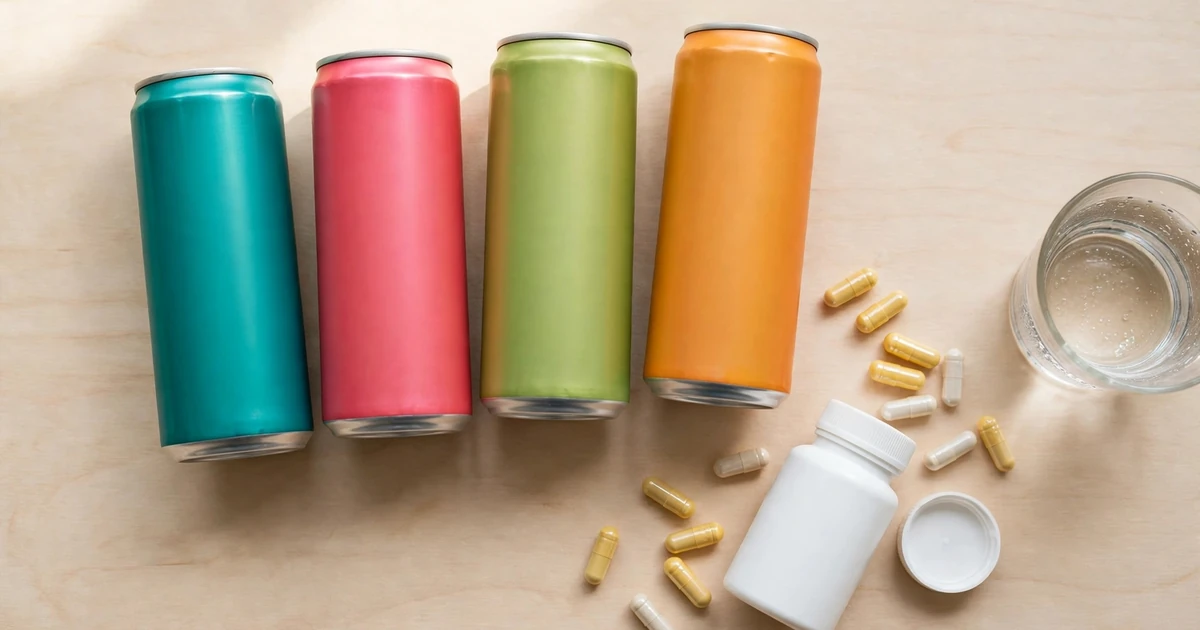
Energy Drinks Heart Risk: How Caffeine Affects the Heart
Caffeine works by blocking adenosine, the chemical that tells the brain it is time to rest. With that signal blocked, the brain stays alert, but the heart also receives a stronger push to beat faster and harder. Energy drinks heart risk comes from this double effect: the same dose that wakes the brain also raises the heart rate and blood pressure for hours. In a healthy young adult, one small dose is usually handled well, but large doses or repeated doses through the day keep the heart in a higher gear than it was built to hold.
The strain shows up in the numbers doctors measure. After a large energy drink, resting heart rate can rise by ten to twenty beats per minute, and blood pressure can climb by several points for a few hours. For most young adults these numbers settle back down, but for those who drink energy drinks every day, the heart spends more hours each week working harder than it should. Energy drinks heart risk is therefore not about a single can, but about the pattern of use, and the pattern is what the new research linked to higher heart risks in young adults.
How Stimulant Supplements Add to the Risk
Stimulant supplements are the hidden half of this problem. Pre-workout powders, fat-burner pills, and caffeine capsules are sold to young adults who want more energy for the gym or for study. Many of these products hold 200 to 300 milligrams of caffeine per serving, and some add other stimulants. Taken alone they already push the heart, and taken with an energy drink they can double the load in a single morning.
Energy drinks heart risk rises fastest when the two are combined, because the heart faces stimulants from two directions at once. The drink gives a fast hit of caffeine and sugar, while the supplement adds a slower, longer wave of stimulation. Together they can keep the heart rate high for hours, raise blood pressure, and disturb sleep that night, which leaves the person tired and reaching for another can the next morning. Breaking that cycle starts with choosing one source of caffeine, or none at all, on training days.
Energy Drinks Heart Risk: Who Faces the Highest Danger
Not every young adult faces the same danger from energy drinks. The highest risk falls on people who already have a heart condition, high blood pressure, or a family history of heart rhythm problems, because stimulants can wake up problems that were quiet before. Young athletes face extra danger too, since hard exercise already pushes the heart, and adding stimulants on top can tip the balance. Energy drinks heart risk is also higher for people who use energy drinks to stay awake for days, because the body never gets the sleep it needs to recover.
Age matters as well, because teenagers and young adults in their early twenties are still building lifelong habits, and their bodies are more sensitive to stimulants than older adults. A teenager who drinks energy drinks daily is training the heart to work harder at rest, and that habit can follow them into adult life. Doctors advise parents to watch for energy drink use in teens, and to talk openly about safer choices, because the research on energy drinks heart risk shows that early habits are the hardest to break.
Energy Drinks Heart Risk: Warning Signs to Watch For
Energy drinks heart risk often announces itself with signs that are easy to dismiss. A racing heart at rest, a fluttering feeling in the chest, dizziness, or a headache after a can are all signals that the heart is working too hard. Some young adults also notice shaky hands or trouble sleeping. These signs do not always mean serious damage, but they do mean the body is asking for a break, and ignoring them lets the strain continue.
Anyone who feels chest pain, faintness, or a very fast heartbeat that will not settle should stop using energy drinks and stimulant supplements at once and seek medical care the same day. People with a known heart condition, high blood pressure, or a family history of heart rhythm problems should be extra careful, because stimulants can trigger problems that were silent before. A doctor can check blood pressure and heart rhythm, and can advise on safe caffeine limits for your own health. Simple habits that protect the heart, such as the ones in our guide to mistakes that lower cholesterol, also help here.
Safer Choices for Young Adults
Safer choices start with water. Water keeps you hydrated without caffeine, sugar, or stimulants, and it is the best choice before, during, and after exercise. For a gentler lift, try a small cup of tea, a short walk, or a proper night of sleep instead of a can. Young adults who sleep seven to nine hours a night rarely need the jolt that an energy drink promises, and their hearts stay steadier through the day. For what to drink while you train, see our guide to workout drinks, which covers water, electrolytes, and coconut water.
Energy drinks heart risk drops sharply when the habit is cut back step by step. Start by setting a limit of one small can a day, then switch some days to water or tea, and keep energy drinks away from workouts and late nights. Read every label, count caffeine from all sources, and never mix energy drinks with alcohol. If you use a pre-workout supplement, pick one without stimulants, or skip it on days you drink an energy drink.
Better sleep also helps: foods that support rest, such as the sleep foods in our earlier guide, can ease the tiredness that drives the habit. That is how energy drinks heart risk falls, one small swap at a time.
- Swap the morning can for water and a balanced breakfast
- Swap the pre-workout stimulant for a stimulant-free version
- Swap the late-night can for an earlier bedtime
- Swap sugary energy drinks for sparkling water with lemon
- Swap the second can of the day for a short walk outside
Energy Drinks Heart Risk: Frequently Asked Questions
Is energy drinks heart risk real for young adults?
Yes, energy drinks heart risk is real for young adults, and new research reported in November 2026 found energy drinks, stimulant supplements linked to higher heart risks in young adults. The risk comes from high doses of caffeine and other stimulants that raise heart rate and blood pressure. An occasional small can is far less risky than daily use of large cans plus supplements.
How much caffeine is too much in one day?
Many health experts suggest healthy adults stay under about 400 milligrams of caffeine a day. One large energy drink can hold 200 to 300 milligrams, so two cans can use up the whole daily limit. Young adults should count caffeine from every source, including tea, coffee, supplements, and chocolate, not just energy drinks.
Do stimulant supplements make energy drinks heart risk worse?
Yes, stimulant supplements make energy drinks heart risk worse, because they add more caffeine and other stimulants on top of the drink. Pre-workout powders and caffeine pills can each hold 200 to 300 milligrams of caffeine per serving. Using both together can keep the heart rate high for hours, so it is safer to choose one source of caffeine, or none, on any given day.
What are the safest alternatives to energy drinks?
Water is the safest alternative, and it is also the drink your body needs most. A small cup of tea, a balanced meal, a short walk, or a full night of sleep can give steadier energy without stimulants. If you want flavour, try sparkling water with lemon or a small glass of juice, and keep energy drinks for rare occasions only.
When should I see a doctor about energy drinks heart risk?
See a doctor promptly if you feel chest pain, faintness, a racing heart that will not settle, or breathlessness after using energy drinks. Also talk to a doctor before using energy drinks or stimulant supplements if you have a heart condition, high blood pressure, or a family history of rhythm problems. Energy drinks heart risk is different for everyone, so personal advice matters.
Can energy drinks heart risk affect teenagers too?
Yes, energy drinks heart risk can affect teenagers too, and doctors are especially careful with this age group. Teenagers are more sensitive to caffeine than adults, and their hearts and brains are still developing. A teenager who drinks large energy drinks daily may feel a racing heart, poor sleep, and trouble focusing at school. Parents should keep energy drinks out of the house and offer water, milk, or juice instead.
Does mixing energy drinks with alcohol raise the risk?
Yes, mixing energy drinks with alcohol raises the risk, because the stimulant hides the sleepy feeling of alcohol, so people drink more than they realise. The heart then faces alcohol and caffeine at the same time, which can disturb its rhythm. Energy drinks heart risk climbs further when this mix is used at parties or late nights, so the safest choice is never to mix the two.
Final Thoughts on Energy Drinks Heart Risk
Energy drinks heart risk is a warning young adults should take seriously, not a reason to panic. The new research does not say one can will harm a healthy heart, but it does show that daily large cans plus stimulant supplements add up to real strain. The smartest move is simple: drink less, count every source of caffeine, and give your heart days without stimulants. Small changes now protect your heart for years to come.
If energy drinks are part of your daily routine, start cutting back this week and notice how your sleep, mood, and energy change. Many young adults find they feel calmer and more focused once the caffeine rollercoaster stops. Share this guide with a friend who drinks energy drinks daily, because the research on energy drinks heart health young adults is new, and the people who need it most may not have heard it yet.
Disclaimer: This article is for educational and informational purposes only and is not medical advice. Energy drinks heart risk affects everyone differently, so always talk to a qualified healthcare professional before using energy drinks or stimulant supplements, especially if you have a heart condition or high blood pressure.
Author Profile by Health Physical Fitness
I write evidence-based educational articles on health, fitness, wellness, nutrition, diet, weight management, healthy foods, lifestyle and skincare. All articles are for educational and informational purposes only, not medical advice.